




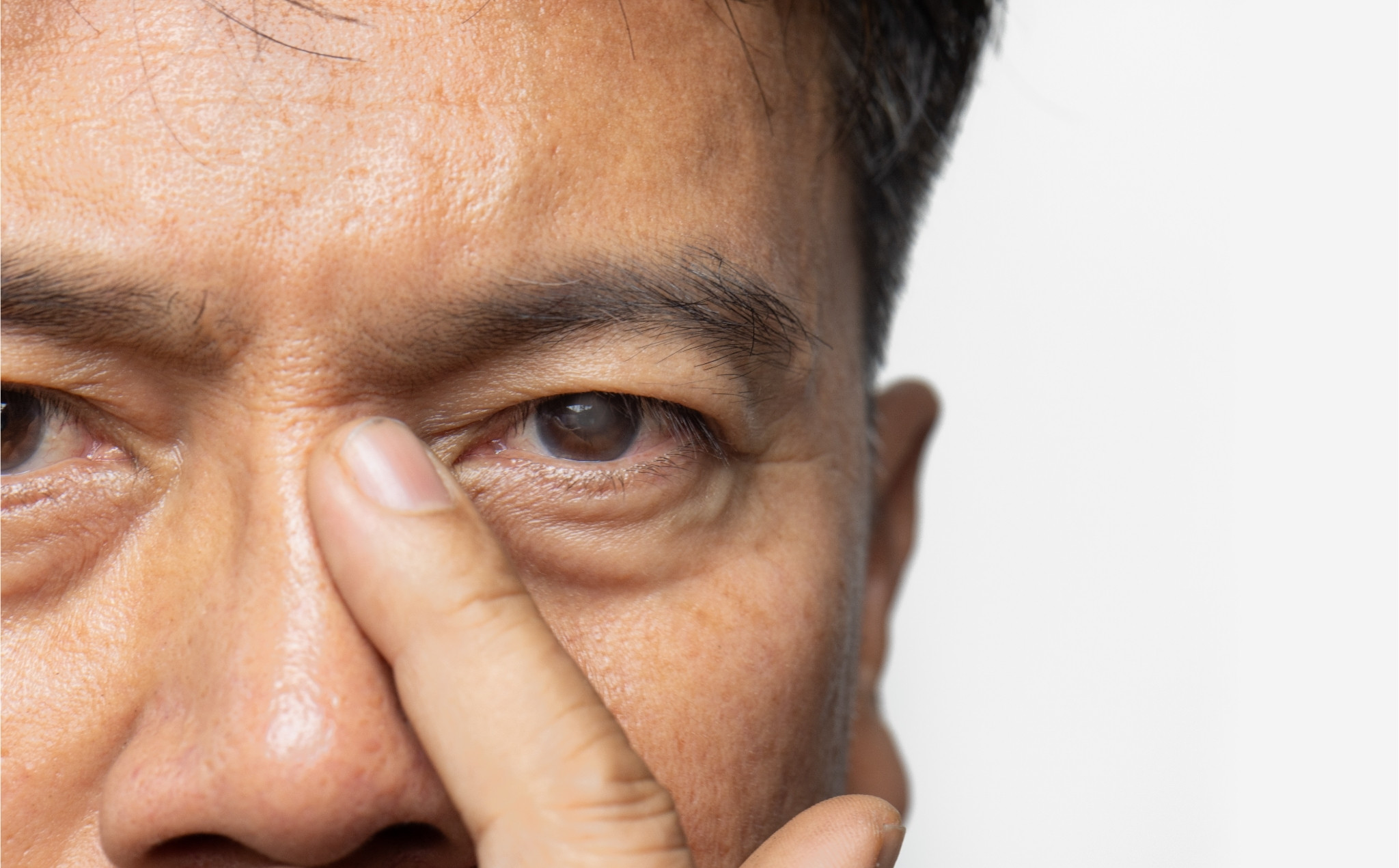
Age-related macular degeneration (AMD) is a condition caused by the deterioration of the macula, the central part of the retina responsible for sharp vision, leading to loss of central vision.
Age-Related Macular Degeneration (AMD) is divided into 2 types
Dry AMD is more common and is caused by waste deposits accumulating beneath the retina, leading to degeneration of the central vision area and a gradual decline in sight. Wet AMD occurs when abnormal blood vessels grow under the retina, causing fluid leakage or vessel rupture with bleeding beneath the retina. The photoreceptor cells swell and form scars, resulting in rapid vision loss.
What are the risk factors for macular degeneration?
- Age over 50 years
- Genetics: a family history of macular degeneration
- Smoking
- Alcohol consumption
- Chronic conditions such as diabetes, hypertension, and high cholesterol
- Prolonged exposure to ultraviolet light
What are the symptoms of macular degeneration?
- Blurred or reduced vision
- Distorted images (metamorphopsia)
- Color vision changes
- A dark spot in the center of vision
- Needing brighter light to see clearly
How is macular degeneration treated?
- Treatment for dry AMD
At present there is no cure. Management aims to slow progression by controlling risk factors affecting the macula, attending regular eye examinations with an ophthalmologist, and treating coexisting eye conditions such as myopia or cataracts. - Treatment for wet AMD
The goal is to seal or destroy fragile submacular vessels to stop leakage and prevent rupture, using laser therapy or intravitreal injections. If there is bleeding into the vitreous and beneath the macula, the doctor may consider surgery to clear the blood.
How can macular degeneration be prevented?
- Wear sunglasses when outdoors
- Avoid alcohol
- Do not smoke
- Exercise regularly
- Maintain a healthy weight and normal blood pressure
- Eat a balanced diet with adequate nutrients, such as leafy greens, fresh fruit, and fish
- Have an eye exam every year