




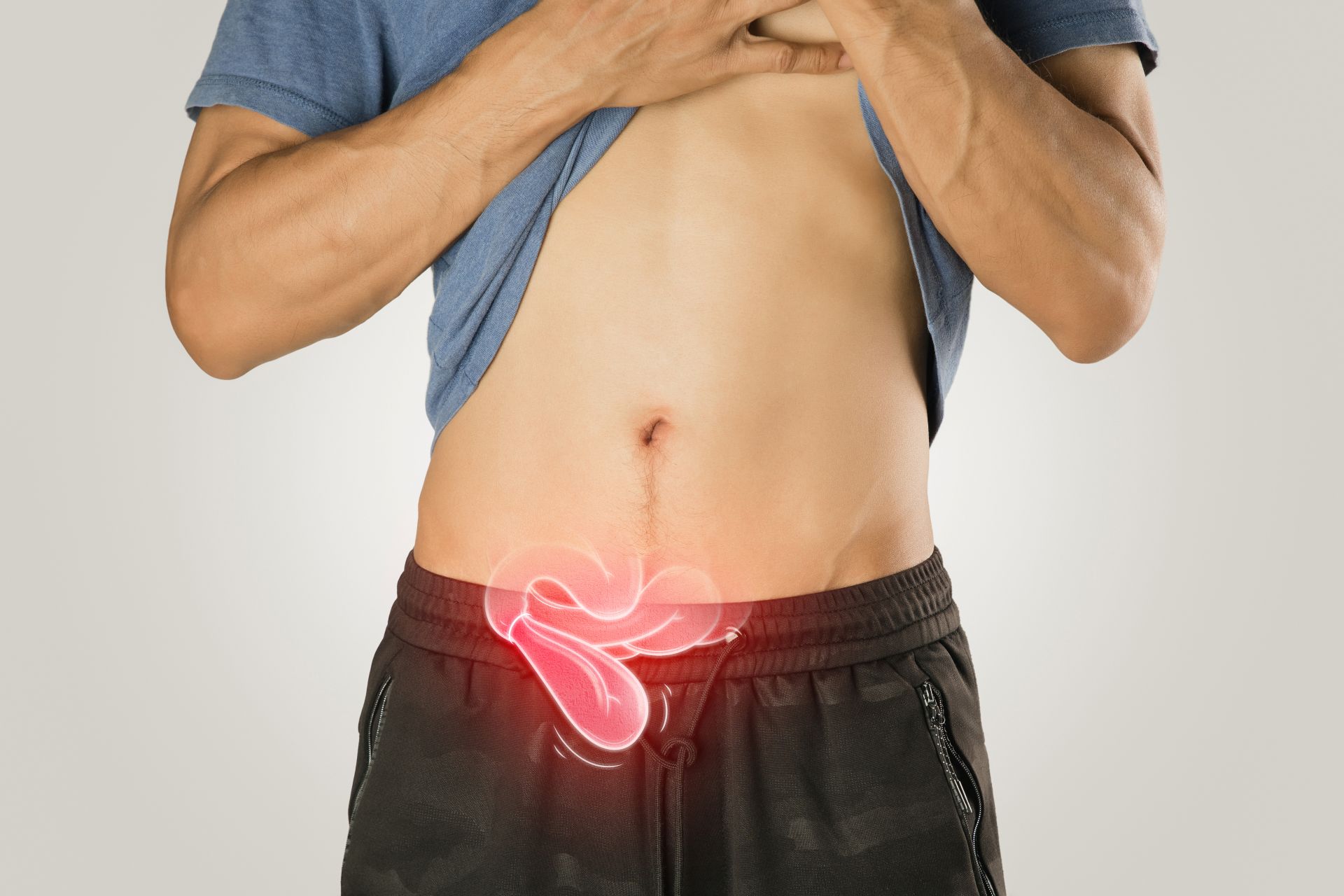
โรคไส้เลื่อน (Hernia) คือ ภาวะที่อวัยวะภายในช่องท้อง (ส่วนใหญ่มักเป็นลำไส้เล็กหรือเนื้อเยื่อไขมันในช่องท้อง) เคลื่อนที่ออกจากตำแหน่งปกติผ่านทางรูหรือผนังกล้ามเนื้อที่อ่อนแรง ทำให้เกิดเป็นก้อนนูนที่สามารถเห็นหรือคลำได้ พบได้บ่อยในหลายตำแหน่งของร่างกาย ที่พบบ่อยคือบริเวณขาหนีบ สะดือ หรือรอยแผลผ่าตัดเดิม
Hernia is a condition in which an internal organ in the abdominal cavity (most commonly the small intestine or abdominal fat tissue) protrudes from its normal position through a weak spot or opening in the muscle wall. This results in a visible or palpable bulge. Hernias can occur in several parts of the body, most commonly in the groin, around the navel, or at the site of a previous surgical incision.
How many types of hernia are there?
- Inguinal Hernia – The most common type, accounting for about 70–75% of cases. It occurs more frequently in men than women. Abdominal organs push through the groin area and may extend into the scrotum.
- Umbilical Hernia – Also known as a protruding navel. It occurs at or around the belly button. It is common in newborns and often resolves on its own before the age of 4–5 years. In adults, it is usually caused by increased abdominal pressure such as pregnancy or obesity.
- Incisional Hernia – Occurs at the site of a previous surgical incision due to weakened healing or infection of the surgical wound. It may develop years after surgery.
- Femoral Hernia – Less common but more frequently found in older women. It appears below the groin area and has a higher risk of becoming trapped or losing blood supply, so early surgical treatment is recommended.
- Hiatal Hernia – Occurs when the upper part of the stomach pushes through an opening in the diaphragm into the chest cavity. It is often associated with acid reflux symptoms such as heartburn and sour belching.
What are the causes and risk factors for hernia?
The primary cause of a hernia is weakness in the abdominal muscles and connective tissues combined with increased pressure inside the abdominal cavity. Risk factors include:
- Genetic predisposition or incomplete closure of the abdominal wall at birth
- Aging, which leads to weakening of muscles and tissues
- Gender – Men are at higher risk of developing inguinal hernia than women
- Activities or conditions that increase abdominal pressure such as frequent heavy lifting, chronic coughing or sneezing, chronic constipation, frequent straining during bowel movements, difficulty urinating due to enlarged prostate, obesity, abdominal fluid accumulation, or pregnancy
- History of previous abdominal surgery
What are the symptoms of a hernia?
The main symptom is a bulge in the abdominal area such as the groin, navel, or previous surgical scar.
- The bulge may appear or become larger when abdominal pressure increases, such as when standing, lifting heavy objects, coughing, sneezing, or straining
- It may reduce in size or disappear when lying down
- There may be a dull ache or sharp pain around the bulge
- If there is severe abdominal pain, a hard bulge that cannot be pushed back, tenderness, bloating, nausea, vomiting, inability to pass gas, or constipation, it may indicate complications such as an incarcerated or strangulated hernia. Immediate medical attention is required.
How is a hernia diagnosed?
- Medical history and physical examination – The doctor examines the patient while lying down and standing, and may ask the patient to strain or cough to make the bulge more visible
- Ultrasound examination – Used to confirm the diagnosis and differentiate from other conditions when the physical examination is unclear
- CT scan – Often used to evaluate complications or for preoperative planning
Treatment for hernia
Surgery is the main treatment that can permanently repair a hernia and prevent complications. There are two main surgical approaches:
- Open Hernia Repair – The surgeon makes an incision over the hernia site, pushes the protruding tissue back into the abdomen, and reinforces the abdominal wall with a synthetic mesh to reduce the chance of recurrence.
- Laparoscopic Hernia Repair – The surgeon performs the operation using small incisions and a camera. Mesh is placed from inside the abdominal cavity. Advantages include less pain, faster recovery, and smaller scars, although it may have limitations in some cases.
Observation without surgery may be considered in cases of small, asymptomatic hernias, elderly patients with high surgical risk, or umbilical hernias in infants that may close spontaneously. However, careful monitoring for complications is necessary.
How can hernia be prevented?
- Maintain a healthy body weight
- Eat a high-fiber diet and drink plenty of water to prevent constipation and reduce straining during bowel movements
- Avoid lifting heavy objects
- Avoid smoking and reduce the risk of chronic coughing
- Treat underlying conditions that cause straining such as enlarged prostate or chronic cough
- Exercise regularly to strengthen abdominal muscles