




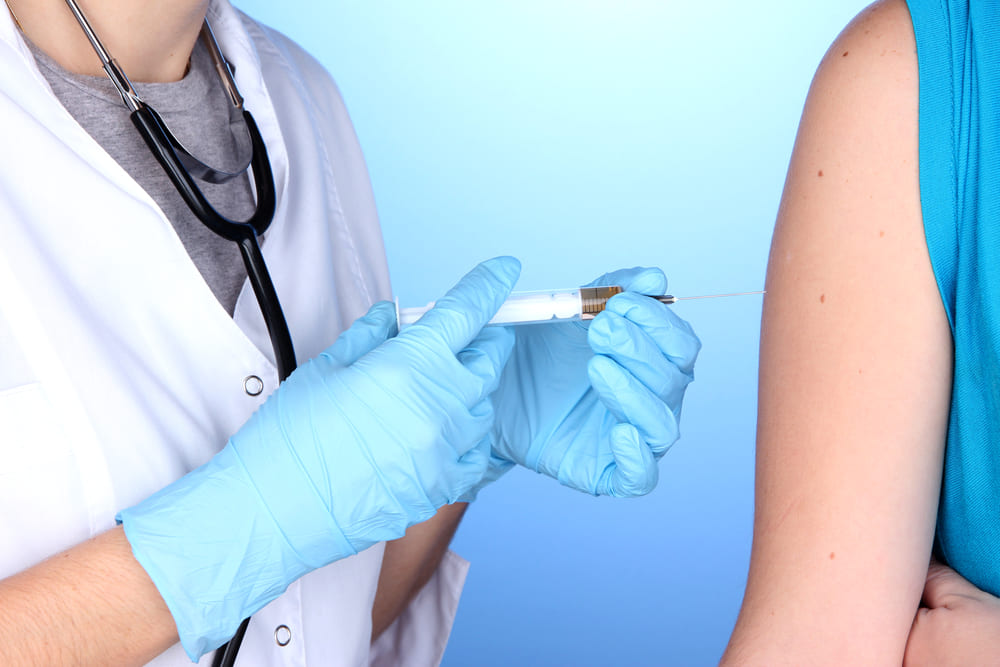
วัคซีนโควิด-19 มีกี่ชนิด อะไรบ้าง วัคซีนป้องกันโรคโควิด-19 ในปัจจุบัน มี 4 ชนิดด้วยกัน ได้แก่
Currently, there are 4 main types of COVID-19 vaccines:
1. Genetic Material Vaccines (mRNA Vaccines)
This category includes mRNA (messenger RNA) vaccines. These vaccines utilize advanced biotechnology to synthesize genetic material (mRNA) specific to the virus. The vaccine delivers mRNA into host cells and instructs them to produce the viral spike protein. This protein then triggers the body’s immune system to generate neutralizing antibodies against the virus. Currently available vaccines of this type include those developed by Pfizer and Moderna. According to clinical data, this type of vaccine demonstrates approximately 95% efficacy in preventing disease, and 100% efficacy in preventing severe illness and death. The Pfizer vaccine is administered as 2 intramuscular doses, spaced 3 weeks apart, while the Moderna vaccine is administered as 2 intramuscular doses, spaced 4 weeks apart.
2. Recombinant Viral Vector Vaccines
This group utilizes genetically engineered viruses, such as adenoviruses, modified so they cannot replicate inside the human body, carrying genetic instructions from the COVID-19 virus. Upon injection, these viral vectors mimic natural infection, prompting the systemic immune response to produce antibodies targeted to the viral genetic code. Although the adenovirus vectors are replication-incompetent, they remain biologically active upon entry; thus, they are not currently recommended for severely immunocompromised individuals pending further conclusive data. Widely used brands in this category include: Chimpanzee Adenovirus by AstraZeneca (approx. 70–80% symptomatic protection, 100% protection against death); Human Adenovirus Type 5 by CanSinoBio (approx. 60% symptomatic protection); Human Adenovirus Type 26 by Johnson & Johnson (approx. 64–72% symptomatic protection); and Human Adenovirus Types 5 & 26 by Russia’s Gamaleya Institute (approx. 90% symptomatic protection).
3. Protein Subunit Vaccines
Vaccines produced using this platform represent a well-established technology familiar worldwide, as it has long been used for influenza and hepatitis B vaccines. It is manufactured by producing recombinant viral proteins using cell culture, yeast, or baculovirus expression systems, which are then combined with an immune-enhancing adjuvant. Once injected, it stimulates the immune system to produce antibodies targeting the spike protein of the COVID-19 virus. The leading vaccine in this group is Novavax, produced via baculovirus systems and formulated with the Matrix-M adjuvant, providing approximately 60–90% symptomatic protection and 100% protection against death.
4. Inactivated Vaccines
This category is produced by culturing and mass-propagating the COVID-19 virus, followed by chemical or physical inactivation (killing the virus). Upon vaccination, the body develops an immune response against all components of the whole virus, simulating direct exposure without causing disease since the pathogen is non-viable. This proven technology is widely used in Hepatitis A and injectable Inactivated Polio Vaccines (IPV), offering a long-established safety and efficacy profile. However, because culturing live viruses requires rigorous biosafety precautions, production is relatively slow and cost-intensive. A primary vaccine in this category is Sinovac, which offers approximately 50–70% protection against symptomatic disease and 100% protection against death.
Contraindications and Precautions for COVID-19 Vaccination
The universal contraindication for all vaccine platforms is a known severe allergic reaction to any vaccine component. Because these vaccines represent relatively new formulations, rare allergic reactions may not yet be widely recognized. Therefore, vaccinations should initially be administered in clinical facilities equipped with emergency resuscitation capabilities, and patients should be observed on-site for at least 30 minutes post-injection.
If you experience any of the following symptoms after vaccination, seek immediate medical attention at a nearby medical center or call 1669 for emergency medical assistance:
- High fever
- Severe chills and shivering
- Severe, unrelenting headache
- Chest tightness, shortness of breath, or respiratory distress
- Persistent vomiting (more than 5 times)
- Generalized rash or skin peeling
- Multiple petechiae or widespread subcutaneous bleeding spots
- Facial drooping or mouth asymmetry
- Weakness in limbs, muscular paralysis, or loss of balance
- Significant lymph node enlargement (lymphadenopathy)
- Seizures, convulsions, or loss of consciousness
Consult an Infectious Disease Specialist at a Synphaet Hospital Branch Near You
Consult an Infectious Disease Specialist at a Synphaet Hospital Branch Near You
(Click link to book an appointment with a specialist)
Synphaet Ramintra Hospital
Synphaet Lam Luk Ka Hospital
Synphaet Seriruk Hospital
Synphaet Theparak Hospital
Synphaet Srinakarin Hospital
Synphaet Kanchanaburi Hospital
Synphaet Children’s Hospital