




Get to Know 3 Technologies That Restore Walking for Patients with Brain Disorders
For patients with neurological diseases, there’s nothing more important than regaining quality of life and being able to walk again. In the past, that hope often felt distant. Today, as technology advances, treatments keep improving—from robotic-assisted surgery to knee replacements—and especially technologies that help restore gait for patients with brain disorders. In this article, Synphaet Ramintra explains what causes neurological conditions, which diseases may regain walking ability through rehabilitation, and introduces 3 technologies that help patients return as closely as possible to normal life.
What Causes Brain and Nervous System Disorders?
Before exploring causes, it helps to understand the brain. The brain is highly complex and controls every function of the body—including movement, thinking, cognition, memory, and behavior. When something goes wrong, the consequences can lead to disability and even be life-threatening. Broadly, brain disorders arise from two main causes:
- People with abnormal genes: They have a higher risk of neurological disease. Even minor triggers may precipitate abnormalities in the body.
- People without abnormal genes: This group can reduce risk by exercising regularly, getting enough sleep, avoiding alcohol, and—most importantly—not smoking.
Brain Disorders That Often Require Gait Rehabilitation
Six key neurological conditions commonly requiring gait rehabilitation include:
Ischemic Stroke
A stroke causes sudden numbness and weakness of the arm, leg, or face on one side due to narrowed, blocked, or ruptured arteries supplying the brain, leading to oxygen deprivation. Prompt treatment within 3–4 hours greatly improves recovery and may even eliminate the need for gait technologies.
Traumatic Brain Injury (TBI)
TBI results from severe impacts to the head or body. Mild cases cause temporary brain cell dysfunction; severe injuries can cause extensive brain damage, complications, and even death.
Parkinson’s Disease
Parkinson’s arises from loss of brain cells that produce dopamine—the chemical that controls muscle movement. As dopamine declines, movement becomes difficult, leading to tremor and gait impairment.
Cerebellar Stroke
Stroke of the cerebellum occurs when blood flow is cut off by arterial narrowing, occlusion, or rupture. Damaged tissue disrupts brain function, causing vertigo, imbalance, clumsiness, slurred speech, and double vision.
Multiple Sclerosis (MS)
MS is inflammation of central nervous system myelin affecting the eyes, spinal cord, and brain. The exact cause is unclear, but genetics, environment, low vitamin D, certain infections, and immune dysregulation play roles. Symptoms include limb weakness, spasticity, cramps, poor balance, urinary retention, chest tightness or stabbing pain, and sudden blurred vision.
Brain Tumor
A brain tumor is an abnormal cell mass—benign or malignant—arising in the brain or spreading there from elsewhere. Severity depends on location and growth rate.
These six conditions are examples in which patients may recover walking ability to near-everyday levels with proper rehabilitation.
Three Technologies That Help Restore Gait
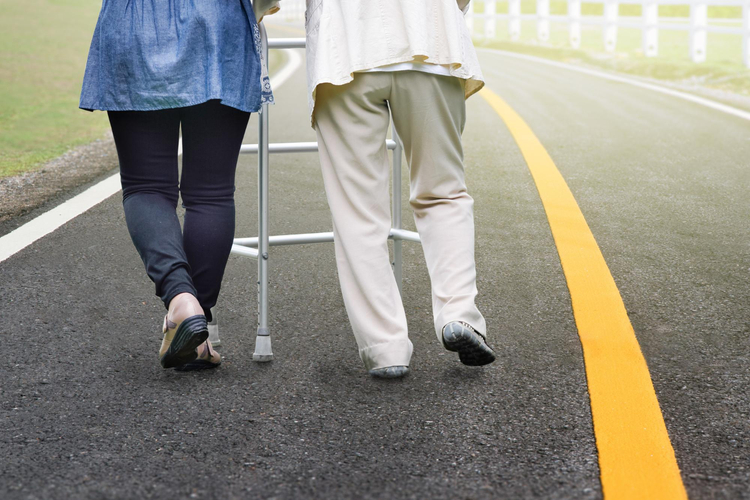
Below are three technologies that support gait rehabilitation and how each one works:
Robot-Assisted Gait Training with an End Effector System
This technology coordinates natural movement of the feet, ankles, knees, legs, and hips to retrain proper gait patterns. It is suitable for patients after stroke or paralysis, those with balance problems, or reduced leg strength—helping them walk more normally.
Brain Cell Stimulation and Rehabilitation with TMS Magnetic Waves
Transcranial Magnetic Stimulation (TMS) stimulates and rehabilitates patients with paresis or paralysis and treats chronic neuropathic and muscular pain. Using electromagnetic waves—similar to MRI in principle—it penetrates 1–3 centimeters to modulate neuromuscular activity without harming surrounding organs.
Hoist System for Gait and Balance Training
The Hoist System assists patients with mobility and balance issues—especially those with stroke, post-operative recovery, or muscle weakness. The device partially supports body weight to make gait practice safer and reduce fall risk during rehabilitation.
Conclusion
Brain-related conditions are more common than many realize. Regular exercise, adequate sleep, and stress management are the safest daily habits to reduce risk. If you’d like a neurological checkup, visit the Brain and Nervous System Center at Synphaet Ramintra Hospital, where specialists provide accurate, targeted diagnosis and care.