




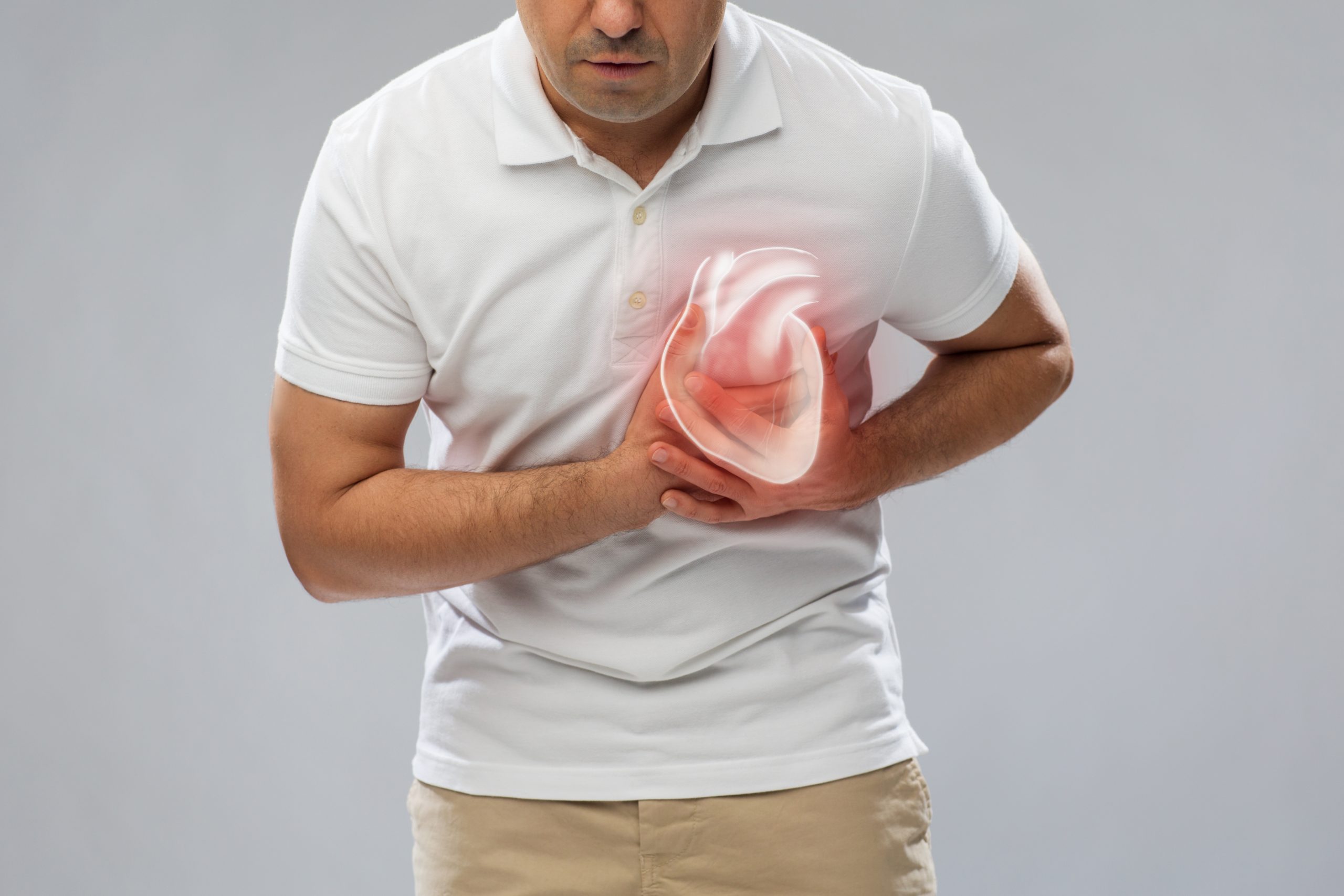
Myocardial ischemia occurs when the coronary arteries that supply blood to the heart become blocked, resulting in an insufficient blood supply to the heart muscle. This can impair the function of the heart muscle and may eventually lead to a heart attack (myocardial infarction).
Warning Signs… Who’s at Risk of Coronary Artery Disease?
What are the symptoms of coronary artery disease?
- Chest pain or tightness, especially during physical activity. The pain is often deep and centered in the middle or left side of the chest and may radiate to the shoulders, neck, jaw, or left arm. The pain may improve with rest.
- Shortness of breath
- Excessive sweating and palpitations
- Dizziness or fainting
- Nausea or vomiting
Who is at risk for coronary artery disease?
Coronary artery disease (CAD) can develop due to several risk factors. The more risk factors a person has, the greater the chance of developing CAD. Key risk factors include:
- Male gender is more prone to CAD than females
- Age over 45 in men and over 55 in women
- Diabetes
- High blood cholesterol levels
- Hypertension
- Abdominal obesity
- Physical inactivity
- Smoking
- Chronic stress
- Family history of coronary artery disease
How is coronary artery disease diagnosed?
When coronary artery disease is suspected, the physician will select diagnostic methods based on symptoms, severity, risk level, and disease progression. Important diagnostic methods include:
- Detailed medical history and physical examination by a doctor
- Blood tests for cardiac enzymes, indicating heart muscle damage, and testing for risk factors like diabetes or high cholesterol
- Electrocardiogram (ECG) at rest and during exercise (Exercise Stress Test)
- Echocardiography to assess heart size, shape, valves, major arteries, contraction, blood flow velocity and pressure
- Coronary Angiography using a catheter inserted through an artery to inject contrast dye into the coronary arteries, then capturing images to detect narrowing
- Cardiac MRI to visualize heart structure, muscle characteristics, and blood vessel function
Coronary artery disease is a life-threatening condition. Without timely diagnosis and treatment, it can lead to severe complications or death. Recognizing early signs and seeking medical attention is crucial.
What is coronary artery disease?
Coronary artery disease (CAD) refers to the narrowing or blockage of coronary arteries that supply blood to the heart muscle. This restricts oxygen supply, causing damage and possibly leading to heart failure or death.
Risk factors for coronary artery disease
There are two major types of risk factors:
– **Uncontrollable:** Age, family history
– **Controllable:** High blood pressure, high cholesterol, diabetes, smoking, inactivity, overweight or obesity
Effective and safe treatments for coronary artery disease
Treatment aims to restore blood flow, reduce symptoms, and prevent complications. Options include:
1. **Medications**
– Antiplatelet drugs (e.g., Aspirin, Clopidogrel) to prevent blood clots
– Nitrates (e.g., Nitroglycerin) to dilate blood vessels and relieve chest pain
– Beta-blockers to reduce heart rate and blood pressure
– Statins to lower cholesterol and prevent plaque buildup
– ACE inhibitors to manage blood pressure and prevent heart failure
2. **Procedures**
– **Percutaneous Coronary Intervention (PCI):** A balloon is inserted and inflated in the narrowed artery; a stent may be placed to keep the artery open
– **Coronary Artery Bypass Grafting (CABG):** Surgical creation of a new route to bypass blocked arteries
3. **Lifestyle Changes**
– Eat heart-healthy foods: vegetables, fruits, whole grains, fish, and healthy fats
– Regular aerobic exercise: at least 150 minutes per week
– Maintain healthy weight
– Quit smoking
– Manage stress through relaxation techniques like yoga or meditation
Can coronary artery disease be prevented?
Yes. Prevention includes:
– Controlling blood pressure
– Managing cholesterol and triglycerides
– Regulating blood sugar (especially for diabetics)
– Quitting smoking
– Maintaining a healthy weight
– Reducing stress
– Regular heart health checkups
Frequently Asked Questions about Coronary Artery Disease (FAQ)
Should people without symptoms get their heart checked?
Yes. Even if no symptoms are present, routine heart screenings are important, as heart disease may remain “silent” until a serious event like a heart attack or failure occurs.
Which is better: Balloon angioplasty or bypass surgery?
Both PCI and CABG have pros and cons:
**Balloon angioplasty (PCI)**
*Pros:*
– Minimally invasive, faster recovery
– Shorter hospital stay
– Lower risk and cost
*Cons:*
– Higher risk of re-narrowing
– Not ideal for multiple blockages
**Bypass surgery (CABG)**
*Pros:*
– Better for multiple blockages
– Lower recurrence in some patients
– Potentially better long-term outcomes
*Cons:*
– Major surgery with higher risk
– Longer recovery and hospital stay
– Higher cost
Can coronary artery disease be cured?
No, but it can be managed. CAD is a chronic condition caused by plaque buildup. Medical treatments can control symptoms and slow progression, but a complete cure is generally not possible.