





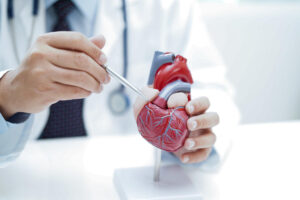
Targeted Treatment for Coronary Artery Disease
Today, heart disease is increasingly common due to changing lifestyles. One of the most prevalent conditions is coronary artery disease. There are several treatment options; one of them is coronary artery bypass surgery, which treats this widespread heart condition.
Coronary artery bypass grafting (CABG) is an operation that creates new blood flow routes to bypass narrowed or blocked coronary arteries so that oxygen-rich blood can better reach the heart muscle. In this article Synphaet explains which heart conditions can be treated with CABG, how to prepare before and after surgery, and why you might choose to receive care with us.
Which heart conditions require coronary artery bypass surgery?
There are two main heart conditions that commonly require coronary bypass surgery: ischemic heart disease and significant coronary artery stenosis. Their typical presentations are described below.
Ischemic heart disease
Ischemic heart disease results from narrowing or blockage of coronary arteries, reducing blood supply to the heart muscle. This can cause chest pain, easy fatigue, and shortness of breath. If left untreated, it may lead to serious complications such as myocardial infarction (heart attack). Ischemic myocardium myocardial necrosis
Coronary artery stenosis
Coronary artery stenosis, or narrowing of the coronary arteries, is caused by accumulation of fat, cholesterol, and other substances on the artery walls. Over time the lumen gradually narrows and blood flow to the heart muscle becomes insufficient. If progression continues, this may result in severe complications such as myocardial infarction or heart failure.
In addition to those two main conditions, CABG may be indicated for other problems such as advanced atherosclerosis, thrombotic occlusion, patients at high risk of sudden cardiac arrest, and acute heart failure.
Who is a suitable candidate for coronary artery bypass surgery?
CABG is typically appropriate for patients with the following characteristics:
- A history of severe coronary artery disease or previous coronary artery occlusion
- Documented ischemic heart disease or prior myocardial infarction
- Patients with acute coronary syndromes not suitable for percutaneous interventions (balloon angioplasty and stenting) because of high risk of arterial rupture, complex occlusion sites, or rigid vessel walls
- Patients with diabetes and chronic kidney disease who have significant arterial blockages
- Patients with valvular diseases (stenosis or regurgitation) assessed as requiring surgery
Symptoms that may indicate the need for CABG
Signs indicating possible need for bypass surgery include:
- A heavy pressure or tightness in the epigastric area, as if a heavy weight is pressing down
- Severe chest pain radiating to the left shoulder, back, jaw, or lower chin
- Shortness of breath, palpitations, profuse sweating, or easy fatigue
- Fainting, loss of consciousness, or episodes of cardiac arrest
- Severe dysfunction or significant narrowing of left ventricular contraction

How coronary artery bypass surgery is performed
CABG can be performed using different techniques. Broadly, procedures are classified by whether or not they use a cardiopulmonary bypass machine (heart–lung machine).
On-pump coronary artery bypass (using cardiopulmonary bypass)
In on-pump CABG the surgeon temporarily stops the heart and uses a heart–lung machine to pump and oxygenate the blood while grafts are sewn into place to bypass blocked coronary arteries. This technique is widely accepted by cardiac surgeons and is considered effective for many patients in the long term.
Off-pump coronary artery bypass (beating-heart surgery)
Off-pump CABG is performed without stopping the heart. The surgeon uses specialized local stabilizing instruments to immobilize the portion of the heart where the graft will be attached while the rest of the heart continues beating. This approach can reduce certain complications associated with cardiopulmonary bypass.
Preoperative diagnosis before CABG
Preoperative workup before CABG has two main components.
Medical history and symptom assessment
- Detailed history of symptoms such as chest pain, palpitations, shortness of breath, lightheadedness, or syncope. Angina
- Family or personal history of heart disease, such as myocardial infarction or sudden cardiac events.
- History of dyslipidemia, hypertension, diabetes, or kidney disease.
- Previous abnormal cardiac screening tests such as ECG, treadmill test, echocardiography, or CT coronary angiography.
Cardiac investigations
- Electrocardiogram (ECG/EKG)
- Echocardiography to assess current heart function
- Exercise stress testing such as treadmill or bicycle ergometry
- Coronary angiography (catheter-based) or CT coronary angiography

Preoperative preparation for CABG
Typical preoperative preparations include:
- One week before surgery, your doctor may ask you to stop certain medications such as clopidogrel, antiplatelet agents like aspirin, anti-inflammatory drugs, ibuprofen, and naproxen (mild to moderate analgesics).
- Avoid alcohol and stop smoking.
- Do not eat for at least 6 hours before surgery.
Postoperative care after CABG
After surgery, recommended postoperative care typically includes:
- Stay in the intensive care unit (ICU) for 1–2 days for close monitoring. If recovery is satisfactory, you will be moved to a regular ward.
- Doctors will prescribe pain management and medications to prevent complications such as thromboembolism.
- Patients should adopt healthy lifestyle changes including a heart-healthy diet and regular, appropriate exercise tailored to cardiac recovery.
Why choose CABG at Synphaet Hospital?
Why have coronary artery bypass surgery at Synphaet? Synphaet is a leading private hospital with a modern cardiac center and many years of experience treating heart disease. Advantages of choosing Synphaet for CABG include:
- Expert cardiac team : Synphaet has an experienced team of cardiac surgeons and specialists skilled in CABG procedures.
- Modern technology : The hospital uses advanced medical equipment and technology that improve surgical accuracy and safety.
- Comprehensive patient care : Synphaet emphasizes close patient care before, during, and after surgery.
- High cleanliness and safety standards : The hospital prioritizes patient safety and infection control.
If you would like more information about coronary artery bypass surgery at Synphaet, please contact the hospital directly.