




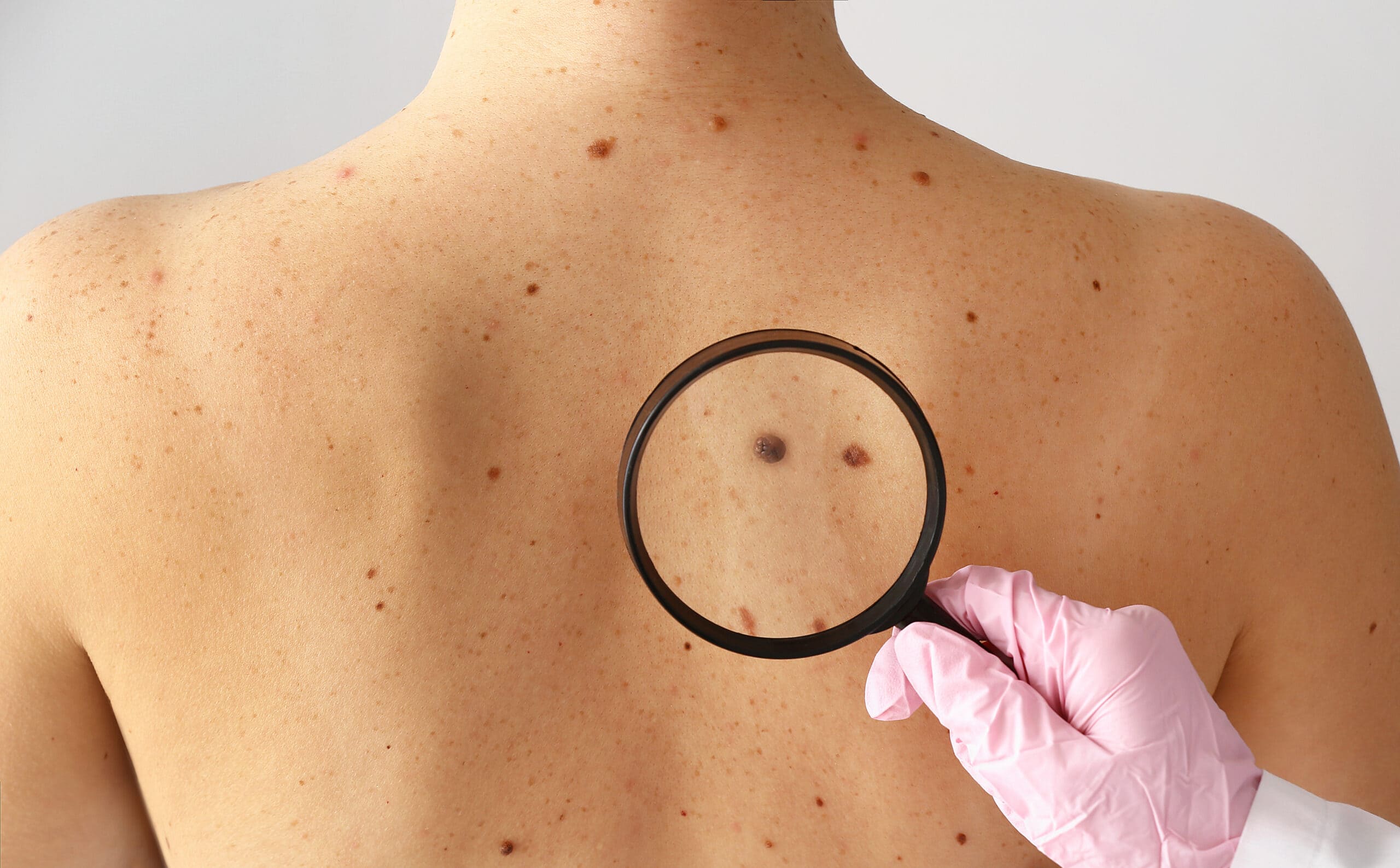
Skin cancer occurs when skin cells grow and divide abnormally, turning into cancerous cells. It can develop anywhere on the body and is classified into two main types: skin cancers arising from skin cells, most commonly basal cell carcinoma and squamous cell carcinoma, and skin cancer arising from pigment-producing cells, known as malignant melanoma.
Although skin cancer has been relatively uncommon in Thailand, changing environmental conditions are leading to a higher incidence.
What are the risk factors for skin cancer?
- Prolonged exposure to sunlight
- Previous exposure to radiation
- Long-term exposure to chemicals such as arsenic
- Immunodeficiency or the use of certain immunosuppressive drugs
- Fair skin (e.g., light-skinned individuals)
- Family history of skin cancer
- Certain inherited skin disorders
- Chronic non-healing wounds
- Having an unusually large number of moles
- Smoking
What are the symptoms of skin cancer?
- A papule or nodule that enlarges rapidly
- A bump or rash that ulcerates and bleeds
- A chronic wound or rash that does not heal and becomes raised
- An old scar that turns dark with indistinct borders and develops an ulcer
- Changes in a mole—growing in size, uneven color, irregular borders, ulceration, or easy bleeding
How is skin cancer treated?
Treatment depends on the stage and type of skin cancer. Current options include:
- Complete surgical excision of the tumor along with surrounding tissue; this standard treatment offers a cure rate exceeding 90% for appropriate cases.
- Curettage and electrocautery, used in selected patients at high surgical risk and suitable for smaller lesions.
- Cryotherapy with liquid nitrogen; the treated skin forms a scab and sloughs off—best for early-stage lesions.
Outcomes are best when cancer is detected early and can be removed surgically. If you notice suspicious skin changes, consult a specialist promptly for accurate diagnosis and timely treatment.
How can skin cancer be prevented?
- Avoid intense sunlight: wear a hat, long-sleeved clothing and long pants, and use UV-protective umbrellas.
- Apply sunscreen regularly at least 20–30 minutes before sun exposure, and reapply every 2 hours.
- Avoid exposure to chemicals and water/food contaminated with arsenic; avoid unregulated herbal or folk remedies.
- Avoid skin irritants and unnecessary radiation exposure.
- Do not smoke.
- Check your skin regularly; if any suspicious bumps or lesions appear, consult a specialist.