




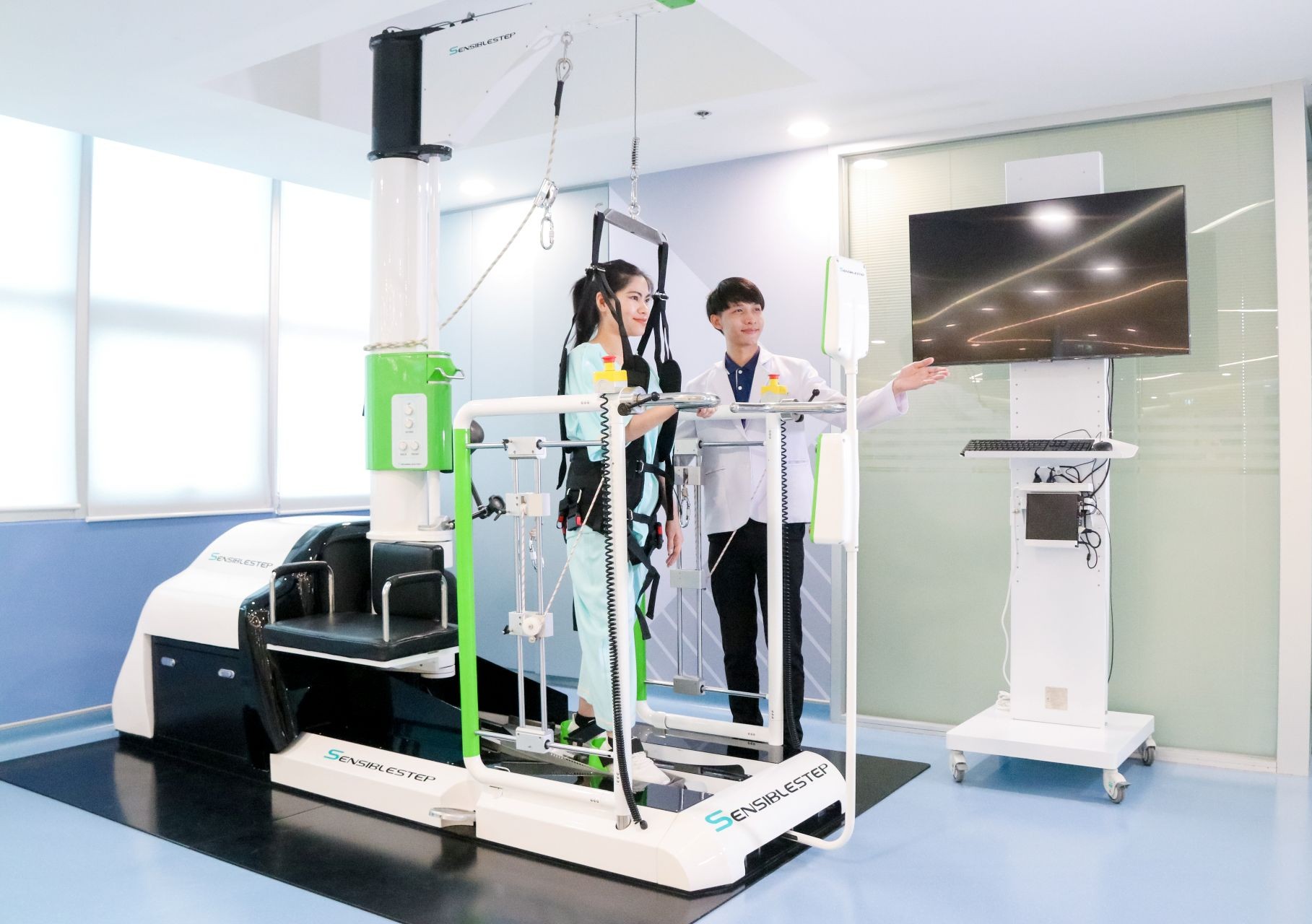
Improve Walking Recovery Faster with Robotic Gait Training
“When you walk better, life becomes better.”
Walking is not just a movement; it involves the nervous system, muscles, and balance. Patients who lose the ability to walk often experience a significant decline in quality of life and may face common complications such as muscle atrophy, pressure ulcers, pneumonia from prolonged bed rest, and an increased risk of long-term depression.
Robotic Gait Training technology has therefore been developed to systematically and safely stimulate neural learning (Neuroplasticity).
What is Robotic Gait Training?
Robotic Gait Training using an End-effector gait robot is a system designed to control step rhythm, walking speed, step length, and body-weight support according to each patient’s individual needs.
The key principles include:
- Repetitive locomotor training (continuous repetitive practice)
- Task-specific training (training that directly targets real walking movements)
- Progressive assistance (providing only the level of support necessary, but as minimal as possible)
The goal is to stimulate the brain to relearn how to control walking effectively.
Which patients are suitable for this therapy?
- Stroke
- Brain injury
- Spinal cord injury
- Hemiparesis or hemiplegia
- Incomplete paraplegia
- Parkinson’s disease
- Post-hip surgery rehabilitation
- Other neurological conditions causing walking impairment
Is there scientific research supporting this therapy?
Research conducted internationally confirms that among stroke patients with severe symptoms who were unable to walk independently, 75% regained the ability to walk without the need for assistance after one month of rehabilitation training using an End-effector gait robot.*
* (Pohl M, Werner C, Holzgraefe M, et al. Repetitive locomotor training and physiotherapy improve walking and basic activities of daily living after stroke: a single-blind, randomized multicentre trial (DEutsche GAngtrainerStudie, DEGAS). Clin Rehabil. 2007;21(1):17-27. doi:10.1177/0269215506071281)
How strong does a patient need to be to start training?
Patients do not need to have full leg muscle strength.
They only need to be able to:
- Sit with legs dangling while using their hands for support
- Have no orthostatic hypotension when changing positions
- Tolerate exercise at 3–5 METs (equivalent to walking on a flat surface)
- Understand and cooperate with the training process
The rehabilitation physician and physical therapy team will evaluate each patient’s suitability before starting the program.
Frequently Asked Questions (Featured Snippet Optimized)
1. Can robotic gait training really help patients walk again?
Yes. It can increase the chances of regaining walking ability, especially for stroke patients who cannot yet walk independently, when the training is performed consistently and appropriately.
2. Can elderly patients with balance problems use this therapy?
Yes, if they pass the medical evaluation and have no contraindications.
3. Is the training painful?
The system is designed to provide body-weight support and adjust assistance according to the patient’s capability, making the therapy safe and well controlled.
4. Why should rehabilitation start as early as possible?
The first 3–6 months after a stroke is the period when the brain has the highest level of plasticity. Intensive training during this period tends to produce the best outcomes.
A confident first step can begin today
If you or someone you love has difficulty walking, do not wait until muscle atrophy or balance problems worsen. Evaluation by a rehabilitation medicine specialist is an important first step.
Schedule an assessment for the Robotic Gait Training program at the Rehabilitation Center. A detailed evaluation by a rehabilitation physician will help determine the most appropriate treatment plan for each patient.