





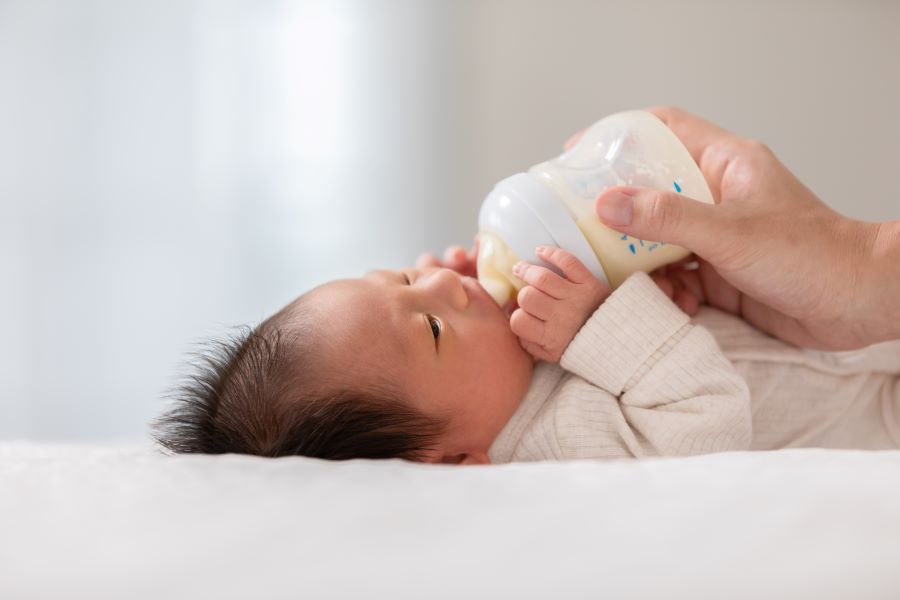
Infant hiccups are common and usually harmless. Learn the causes, when to worry, and effective remedies to ease your baby’s discomfort.
What to Do When Your Baby Has Hiccups – Causes and Remedies
For every parent, especially first-timers, their baby’s health and safety are the top priorities. It’s natural to worry about anything unusual, no matter how small, and one of the most common occurrences in infants is hiccups. But are hiccups dangerous? Don’t panic just yet—this article offers useful information parents should know, along with tips on how to deal with baby hiccups.
Understanding Infant Hiccups: Common in Babies Under 1 Year
Hiccups can happen at any age, but they are especially frequent in infants under one year old. They occur when the baby’s stomach expands from feeding, causing pressure on the diaphragm. When the baby exhales, the diaphragm contracts suddenly, resulting in the hiccup sound. Hiccups can even occur in the womb and usually fade as the baby reaches 4–5 months old. While typically harmless and painless, it’s wise for parents to monitor for any unusual symptoms.
Signs that require closer attention include prolonged hiccups combined with vomiting, lethargy, fever, or unusual irritability. If you notice these symptoms, it’s best to consult a pediatrician for a thorough evaluation, as persistent hiccups might indicate lung, abdominal, or throat-related issues.
What Causes Hiccups in Infants?
Several factors can trigger hiccups in babies. Common causes include:
- Digestive discomfort due to an immature digestive system
- Overfeeding or feeding too quickly
- Swallowing too much air
- Side effects from certain medications
How Parents Can Easily Relieve Infant Hiccups
If your baby experiences hiccups often, here are four simple ways to handle it:
Change the Baby’s Position
If hiccups start during feeding, your baby might be lying too flat. Stop feeding, hold the baby upright, and support their back with a pillow. This posture can help relieve hiccups.
Encourage Burping
Hold your baby upright over your shoulder or sit them up to help them burp. Burping releases trapped air from the stomach or esophagus, reducing hiccups.
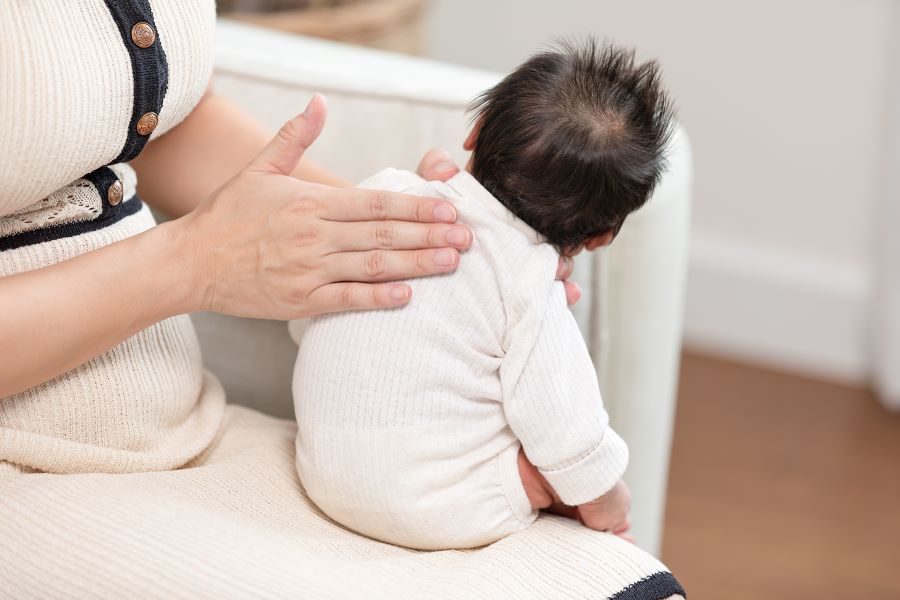
Gently Rub the Baby’s Back
Sit your baby upright on your lap, lean them slightly forward, and support the chin with your fingers. Then gently rub their back from waist to neck. This motion helps release gas and ease hiccups.
Offer a Pacifier
Letting your baby suck on a pacifier helps relax the diaphragm muscles. This can calm hiccups and make them go away quickly.
Preventing Infant Hiccups: Tips for Parents
While hiccups are normal, here are some ways parents can reduce their occurrence:
- Feed in small amounts more frequently
- Burp the baby after every meal
- Avoid feeding when the baby is overly hungry and crying
- Avoid vigorous activities after feeding
- Use a properly sized nipple to prevent excess air intake
If your baby shows any signs of illness or abnormal symptoms, visit Synphaet Ramintra Children’s Hospital for diagnosis and care from experienced pediatricians. For appointments or inquiries, contact our Call Center at 1535