





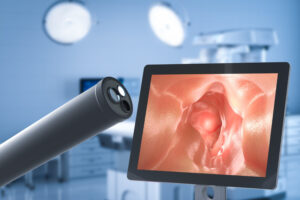
Gastrointestinal Cancer and Colorectal Cancer: Diagnosis by Endoscopy
The word “cancer” immediately evokes danger — a group of diseases that can be life-threatening and has caused countless losses. In Thailand, cancers of the digestive system are among the most common and most dangerous because they often produce mild, nonspecific symptoms at first that resemble common digestive complaints. By the time the disease is recognized, it is frequently advanced.
The best way to halt this threat is regular health screening. The most definitive test is endoscopy. Today Synphaet Seriruk explains the importance of endoscopic exams, the diseases that can be detected, and the hospital’s endoscopy packages to help you maintain good digestive health.
What are upper and lower gastrointestinal endoscopies and why are they important?
Understanding what upper and lower gastrointestinal endoscopies are and why they matter helps clarify their overall benefits. An upper or lower endoscopy uses a flexible tube called an endoscope — a narrow, bendable instrument with a light and camera at its tip — to visualize the inside of the digestive tract on a monitor. Endoscopy is critically important for patients who do not respond to medication or who have persistent symptoms like abdominal pain, bloating, or chronic heartburn. With endoscopy a physician can inspect inflammation, identify ulcers, detect tumors, test for bacteria, take biopsy samples from suspicious areas for cancer evaluation, and stop bleeding when gastrointestinal hemorrhage is found.
What diseases can upper and lower GI endoscopy detect?
Upper and lower GI endoscopy can detect the following conditions:
Stomach (Upper GI)
- Peptic ulcers
- Gastritis
- stomach cancer
- Gastroesophageal reflux disease (GERD)
- Gastrointestinal bleeding
- Gastric tumors
- H. pylori infection
Small intestine
- Small intestinal ulcers
- Enteritis
- Tumors of the small intestine
- small-bowel cancer
Large intestine (Colon)
- Colitis
- Chronic inflammatory bowel disease, such as Crohn’s disease
- Irritable bowel syndrome (IBS)
For patients already diagnosed with IBS, routine colonoscopy is generally not recommended because the procedure can sometimes worsen symptoms.
Rectum and anus
- Hemorrhoids
- Rectal cancer
Who should have a GI endoscopy?
- Endoscopy is suitable for people with the following symptoms:
- Intermittent burning or fullness in the upper abdomen (epigastric discomfort)
- Unexplained weight loss despite normal or increased intake
- Blood in stool or black, tarry stools
- Persistent abdominal pain or heartburn unresponsive to medication
- Family history of stomach cancer
- Colonoscopy is suitable for people with:
- Alternating constipation and diarrhea
- Difficulty passing stool, thin stools, blood or mucus in stool
- Unexplained fatigue
- Anemia, especially in older adults
- Palpable abdominal mass or family history of colorectal cancer
How are upper GI endoscopy and colonoscopy performed?
You may wonder whether it’s necessary to know how these procedures are done since doctors perform them. It’s not required, but understanding the steps can reduce anxiety and help you prepare.
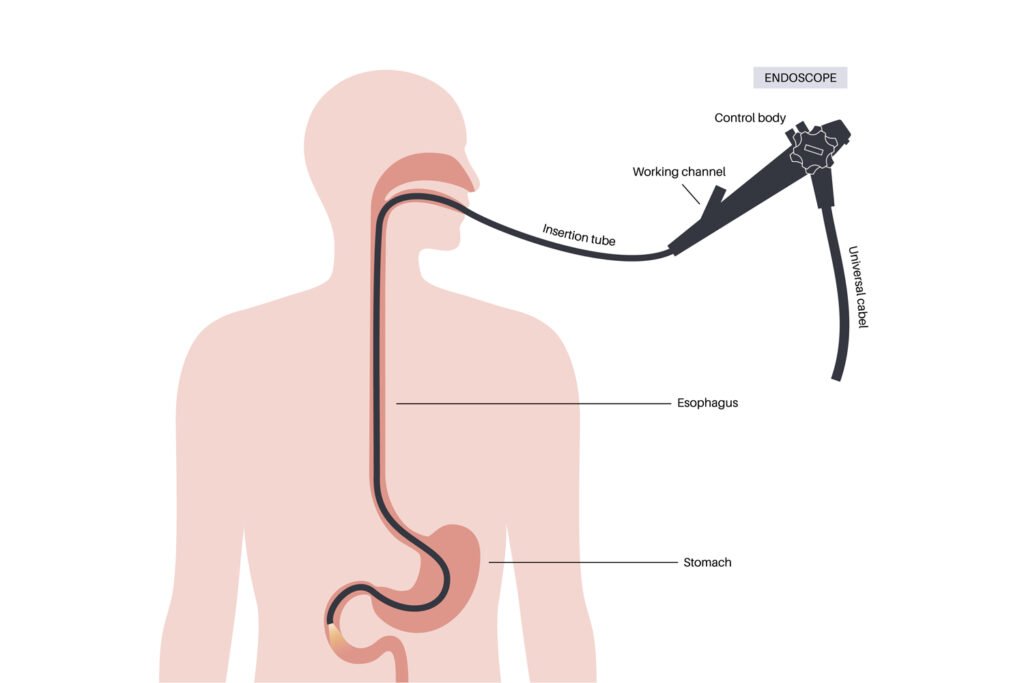
Upper GI endoscopy (Esophagogastroduodenoscopy)
During an upper endoscopy the doctor inserts the endoscope through the mouth and advances it through the esophagus, stomach, and the first part of the small intestine (duodenum). There are two anesthesia options: general sedation administered by an anesthesiologist or topical throat spray anesthesia. Patients may choose according to their preference.
Preparation steps before the test
- Fast for 6–8 hours before the procedure
- Stop anticoagulant medications such as aspirin 7–10 days beforehand to reduce bleeding risk during endoscopy

Colonoscopy
Colonoscopy uses a similar flexible endoscope, but the instrument is inserted through the anus and advanced through the colon. The procedure and sedation options are similar, with differences in approach and preparation.
Preparation steps before the test
- One day before the exam, consume only low-residue clear liquids such as broth, soft foods, or congee
- Stop certain medications as instructed to prevent adverse effects
After either upper endoscopy or colonoscopy, you should not travel home alone because sedation or anesthesia can cause drowsiness and impaired coordination, increasing the risk of accidents. Patients who undergo colonoscopy may experience gas and bloating and should rest quietly for at least two hours. It is advisable to have a family member accompany you on the day of the procedure.

Where should I have endoscopy performed?
Choose a reputable healthcare facility with international standards, advanced equipment, and experienced specialists to ensure accurate diagnosis and safe procedures. Synphaet Seriruk Hospital meets these criteria and is a recommended center for GI endoscopy.
Endoscopy screening packages
Synphaet Seriruk Hospital offers three endoscopy packages:
- Upper GI endoscopy package: 14,000 THB
- Colonoscopy package: 24,000 THB
- Combined upper GI endoscopy and colonoscopy package: 37,000 THB
Do not be afraid of routine health checks. Early detection of any gastrointestinal abnormality prevents progression to advanced disease and potential loss. Synphaet Seriruk Hospital hopes everyone enjoys long, healthy lives. Remember: “Health is the greatest blessing.” If disease is detected, prompt treatment helps patients recover.