






After an ankle sprain, is massage recommended, or should it be treated differently? Learn about basic first aid methods and how to apply cold compresses to reduce swelling and bruising, as well as ways to prevent re-injury.
“Ankle sprain” is one of the most common injuries after tripping or sports. It happens when the ankle twists and the ligaments tear, causing pain and swelling. In severe cases, you may be unable to move the foot or sit and stand normally!
The after-effects of an ankle injury can be annoying and disruptive to daily life. Proper first aid reduces pain and swelling and helps the ankle recover strength faster. Should you massage it? Or use a cold compress? This article explains the correct first-aid steps—read on.
What is an ankle sprain and what causes it?
An ankle sprain is a ligament injury of the ankle caused by twisting or rotating the joint in an abnormal position, stretching or tearing the ligaments and pushing the ankle out of normal alignment. Common causes include:
- Tripping or stepping on an uneven surface so body weight lands abnormally on the ankle
- Sports that require twisting, swinging, rotating, or heavy landings such as basketball, volleyball, or football
- Running or walking on rough, uneven, cracked, or potholed ground
- Wearing unsuitable footwear that makes the foot unstable and slippery
- Weak ankles from recurrent injuries, increasing the chance of sprains
What to do first when an ankle sprain happens?
Correct first aid helps relieve symptoms and limit the severity of injury.
1. Rest the ankle
Stop moving the ankle immediately to avoid worsening the injury. If you must walk, use crutches or a device to offload weight.
2. Apply a cold compress
Place an ice pack or cold towel on the swollen area to reduce swelling and pain. Alternate icing with rest for 15–20 minutes per session.
3. Elevate the foot
Raise the injured leg above heart level to reduce blood flow to the swollen area. Use a pillow under the calf for a comfortable position.
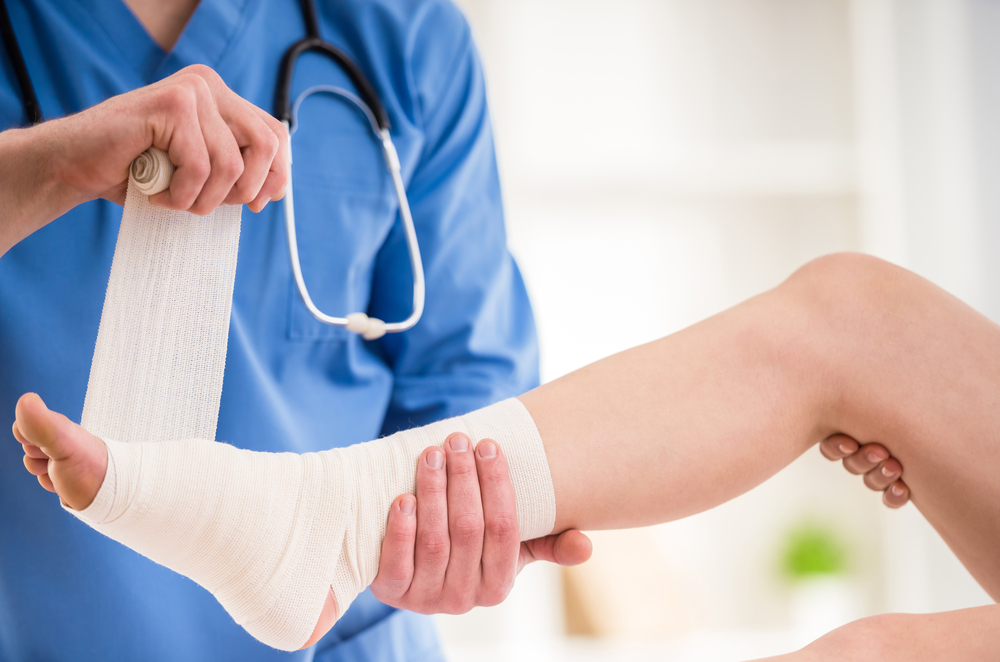
4. Use an elastic bandage
Wrap the ankle snugly—not too tight—to control swelling. Avoid excessive pressure that could impair circulation.
After initial first aid, if symptoms don’t improve, see a doctor for further care such as an X-ray to assess severity. Some cases may need an MRI to visualize ligament and vessel injuries, or an ankle brace depending on severity.
Can you massage a sprained ankle?
Massage is not recommended in the acute phase of an ankle sprain because it can worsen swelling and pain and increase the risk of further ligament or muscle injury around the ankle.
What if the ankle is swollen?
Generally, keep icing and elevating regularly. Swelling usually subsides within 2–3 days. If there’s no improvement within 5–7 days, consult a doctor.
How to apply a cold compress properly?
Correct icing helps reduce swelling and relieve pain. Follow these steps:
- Prepare an ice pack or cold towel. Dampen a towel with cold water and wring it out.
- Wrap the ice pack in a small towel (or use the chilled towel) to prevent ice burns.
- Apply around the swollen ankle—avoid pressing directly on the injured spot.
- Keep the temperature cold and steady by refreshing the ice or re-chilling the towel.
- Ice for 15–20 minutes, then rest about 1 hour before repeating.
- Repeat several times a day until swelling improves.
Post-sprain self-care
Good aftercare promotes healing and helps prevent reinjury:
- Stretch the ankle regularly: Gentle stretching of the surrounding muscles and ligaments improves flexibility, reduces tightness, and lowers reinjury risk.
- Gradually increase load: Avoid jumping back into intense activity. Start with walking, then light jogging, and progress as the ankle strengthens.
- Choose proper footwear and avoid uneven ground: Wear supportive athletic shoes that fit snugly with good traction. Avoid rough or uneven surfaces to reduce impact.
If you sprain your ankle, perform first aid promptly or see a doctor for a thorough evaluation. Untreated injuries may worsen. Visit Synphaet Ramintra Hospital—our Orthopedics & Joints team is ready to help.
We provide modern diagnostics including X-ray and MRI scanning to assess severity and plan the right treatment for you 24 hours a day.
For more information or to make an appointment, call 1535