




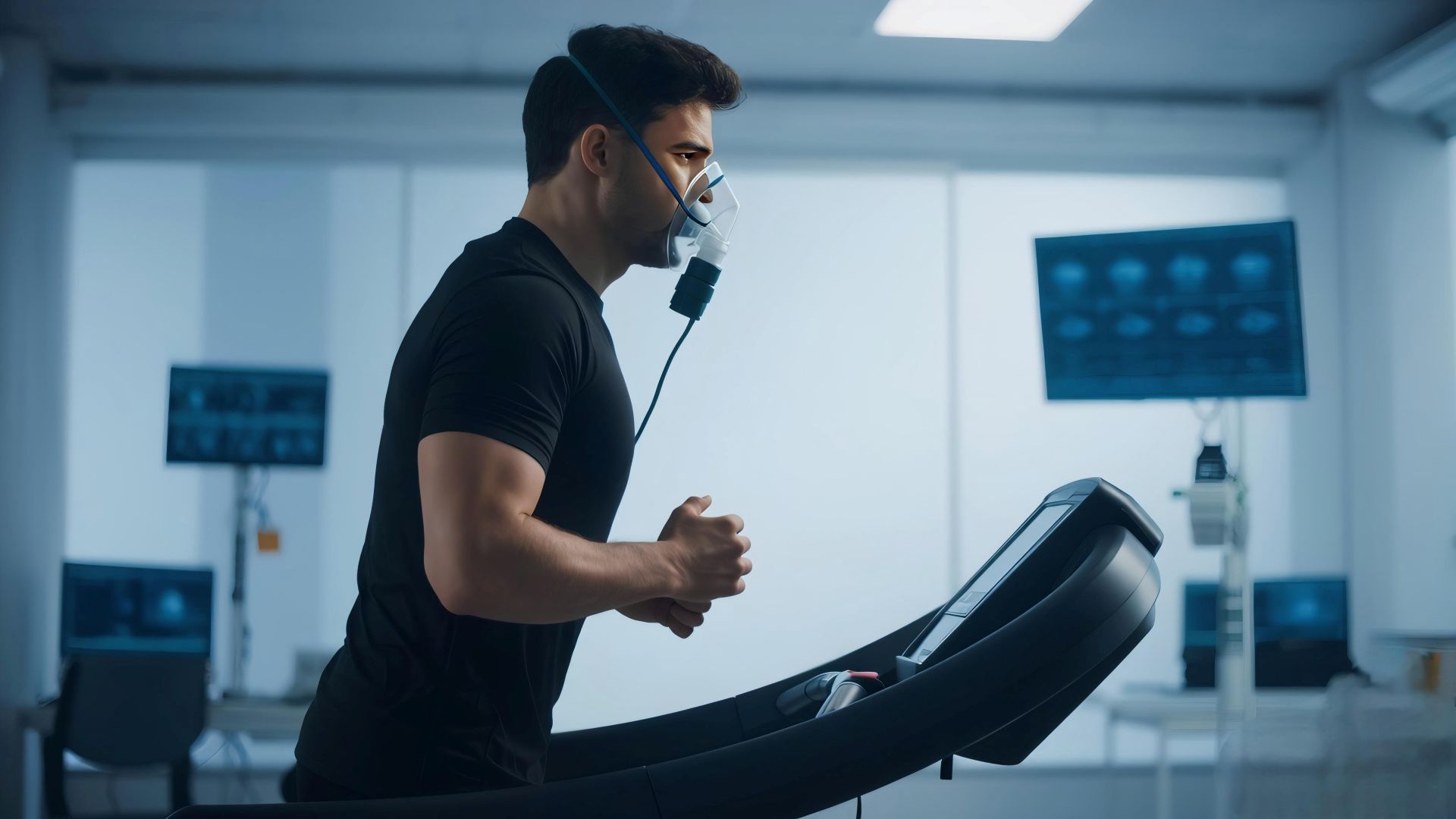
What is CPET?
Cardiopulmonary Exercise Testing (CPET) is an assessment used to analyze how the heart, lungs, and muscles work together during exercise. The test uses advanced technology to measure respiratory gases and the body’s maximum oxygen consumption during exercise (VO2Max). The assessment is performed using either a stationary bicycle or a treadmill.
Who is CPET suitable for?
- Patients preparing for major surgery
- Patients undergoing evaluation for heart or lung diseases
- Patients in the recovery phase after severe illness
- Athletes who want to plan appropriate training programs
- Individuals who want to assess their physical fitness
Testing Procedure
During the test, the participant will cycle on a stationary bike or walk on a treadmill. A mask will be worn to measure breathing, and monitoring devices will be attached to record electrocardiogram (ECG), blood oxygen levels, blood pressure, and gas exchange (O₂ and CO₂).
The entire test typically takes about 30–40 minutes. The participant will perform actual exercise for approximately 10–15 minutes and will be encouraged to exercise to their maximum capacity.
Can people who have never exercised take this test?
Many individuals may be concerned that if they do not exercise regularly or have never exercised before, they may not be able to undergo CPET testing. However, this test is specifically designed to evaluate how the heart, lungs, and muscles work together during physical exertion.
The procedure is conducted under close supervision by physicians and medical professionals. Therefore, whether you exercise regularly or not, CPET testing can be performed safely.
Is CPET testing risky?
CPET is considered a highly safe test, with a risk level comparable to light to moderate exercise. Medical data indicate that the rate of side effects is very low—approximately 1 in 1,000 cases.
During the test, the medical team closely monitors the participant by continuously tracking heart activity through electrocardiography (ECG), measuring blood pressure, and evaluating blood oxygen levels throughout the testing process. If any abnormal signs occur, the test will be stopped immediately to ensure the participant’s safety.
Data Analyzed from CPET Testing
CPET provides in-depth information about how the heart, lungs, and metabolic systems function during exercise. The collected data are analyzed as follows:
• Cardiopulmonary Performance
o Analysis of graphical data demonstrating heart and lung function, including cardiac efficiency, breathing performance, and respiratory gas exchange.
• Oxygen Consumption During Exercise (VO₂ max)
o A measurement of the body’s maximum ability to utilize oxygen for energy metabolism.
• Anaerobic Threshold
o Evaluates the level of exercise intensity at which the body begins to rely on anaerobic energy systems, indicating the onset of fatigue and helping guide training or treatment plans.
• Cardiac Function During Exercise
o Analysis of heart rate, blood pressure, and the cardiovascular response to physical exertion to evaluate cardiovascular system performance.
• Electrocardiogram Results (Electrocardiogram – ECG)
o Records and analyzes the electrical activity of the heart during exercise to detect abnormalities in heart rhythm.
What to Wear for the Test
It is recommended to wear exercise clothing or comfortable attire suitable for light physical activity, such as flexible shirts, pants, and athletic shoes.
Preparation Before CPET Testing
• Avoid heavy meals for at least 2 hours before the test
• Avoid alcohol and caffeinated beverages for at least 4 hours before the test
• Avoid intense exercise within 1 hour prior to the test
• Wear loose, comfortable clothing that is not too tight
• Avoid smoking for at least 1 hour before the test
Additional Information Before CPET Testing
• Please continue taking your regular medications unless otherwise instructed by your physician.
• Please contact the CPET testing department in advance if you have any of the following conditions:
o Respiratory infection or recent recovery from such an illness
o Recent eye, abdominal, or chest surgery
o History of heart attack or stroke within the past 1 month
o Emergency department visit within the past 2–3 days
o Chest pain on the day of the scheduled test
o Please allow at least 60 minutes for the entire testing process on the appointment day
Receiving Your Test Results
Your CPET test results will be sent to your attending physician. The physician will review and explain the results in detail during your next appointment.