





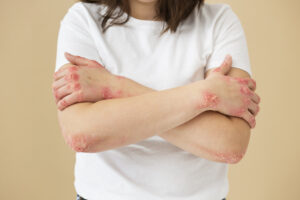
“Psoriasis” — a skin condition that requires carefuly care
Psoriasis is a chronic skin disease caused by immune system dysfunction, leading to abnormally rapid skin cell division and the formation of scaly patches. The most common presentation is thick, raised red plaques covered with silvery-white scales, which is why the condition is called “psoriasis.” Lesions can appear in many body areas such as the scalp, elbows, knees, the back of the hands and feet, and skin folds like the groin and armpits. Lesion location influences symptom severity and treatment approach. Although there is currently no definitive cure, symptoms can be controlled with appropriate medical treatments and self-care.
How does psoriasis develop?
What causes psoriasis? The primary cause of psoriasis is immune system dysfunction: the body mistakenly treats normal skin cells as foreign (similar to bacteria or viruses), triggering immune cells to attack otherwise healthy skin. This immune response accelerates skin cell turnover, causing inflammation and the buildup of thick scaly plaques on the skin.
Other triggers that may provoke or exacerbate symptoms include:
- Genetics: about one in three people with psoriasis have a family member who has had the condition.
- Stress and insufficient rest: these factors can weaken the immune system and trigger or worsen flares.
- Environmental factors: extreme heat or cold, prolonged sun exposure, or insect bites.
- Skin injury: scratching, abrasions, or surgical wounds can cause inflammation and trigger psoriasis at injury sites.
- Viral infections: such as rhinoviruses, HIV, HPV, and hepatitis C virus (HCV).
- Bacterial infections: for example Streptococcus infections of the respiratory tract, which can cause sore throat and tonsillitis.
- Certain medications: such as beta-blockers for hypertension and lithium for psychiatric disorders.
Is psoriasis contagious?
Psoriasis is not contagious. Although it is a visible skin condition that some people may mistakenly assume is infectious, it arises from the body’s own immune dysfunction. It cannot be spread by touch, sharing personal items, or through the air. However, genetic transmission is possible.
What are the symptoms of psoriasis?
Symptoms vary between individuals but commonly include:
- Thick, raised red plaques covered with silvery-white scales
- Itching, burning, or pain at lesion sites
- Dry, cracked skin that may bleed
- Nail changes, such as thickening, ridges, or pitting under the nail
- Some patients may experience joint pain (psoriatic arthritis)

How is psoriasis treated?
Although psoriasis cannot currently be cured, its severity and symptoms can be controlled with appropriate, tailored treatments. Proper care helps reduce inflammation, relieve symptoms, and prevent flare-ups. Physicians may use the following approaches:
Medication
Medication is a primary approach for controlling psoriasis and is chosen based on disease severity and lesion location. Treatments may be topical or systemic, and physicians determine the best plan for each patient. Common medications include:
- Topical corticosteroids to reduce inflammation and control symptoms
- Topical vitamin D analogs (calcipotriol) to slow skin cell growth
- Topical immunomodulators (tacrolimus, pimecrolimus) for delicate areas such as the face or skin folds
- Oral acitretin to reduce skin cell proliferation
- Methotrexate to suppress immune activity and reduce skin inflammation
- Cyclosporine for moderate to severe cases
Ultraviolet (UV) light therapy
Light therapy is another option to reduce psoriasis symptoms by slowing skin cell turnover and decreasing inflammation. Types include:
- Narrowband UVB (NB-UVB) therapy — a widely used and safe option.
- PUVA therapy — UVA combined with psoralen, often used for moderate to severe disease.
- Excimer light therapy — uses a targeted short-wavelength UV source (around 380 nm) to modulate immunity and reduce inflammation, while minimizing skin damage and discomfort during treatment.
Biologic injections
Biologic agents are newer injectable medications that target the immune system to reduce inflammation and slow abnormal skin cell growth. They are typically reserved for severe cases or when other treatments have failed. Biologics require close medical supervision due to potential side effects such as immune suppression and increased infection risk.
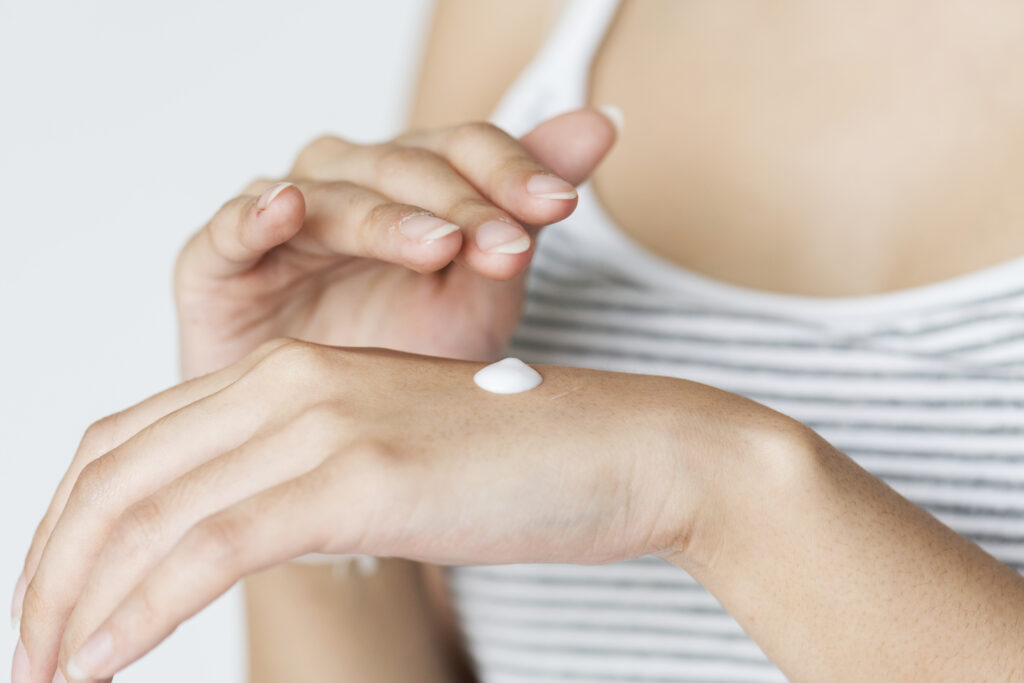
Self-care when you have psoriasis
- Avoid triggers such as stress, dry air, or harsh soaps
- Use moisturizers regularly to prevent dryness and reduce itching
- Avoid scratching, which can cause wounds and worsen symptoms
- Eat a nutritious diet to support overall health
- Exercise and get adequate rest to help support the immune system
- If you are on oral or injectable immunosuppressants, follow your doctor’s instructions strictly and avoid self-medicating, as drug interactions can cause adverse effects
Consult the Dermatology and Laser Surgery Department at Synphaet Seriruk Hospital
If you have psoriasis or other skin conditions and need specialist advice, Synphaet Seriruk Hospital’s Dermatology and Laser Surgery Department offers expert consultation and modern treatment options — including topical therapies, UV phototherapy, and biologics — to effectively control symptoms.
Contact the Dermatology and Laser Surgery Department at Synphaet Seriruk Hospital to schedule an appointment and receive personalized care.