





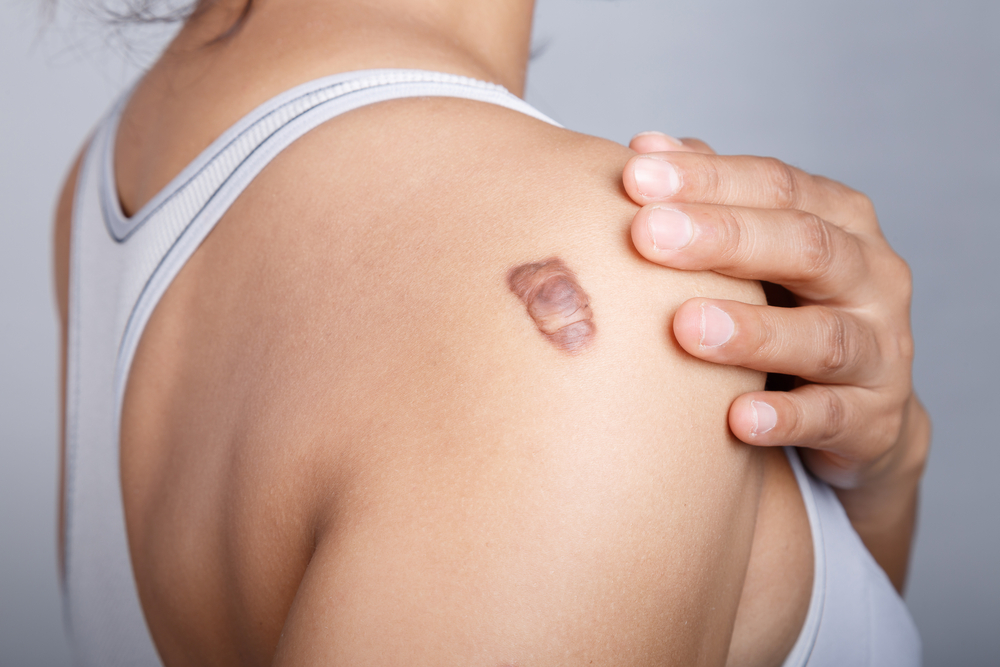
A keloid is a raised scar that often causes itching. While it is not dangerous, it can affect appearance. If you’re wondering whether keloid scars can be treated, this article has the answers.
When it comes to “scars,” no one wants them—especially keloid scars. Although this type of scar isn’t dangerous or life-threatening, it often leaves an unsightly mark on the skin and can be hard to remove. If it appears on visible areas such as the arms, legs, shoulders, or ears, it can also affect self-confidence.
To answer common questions, this article explains what keloids are and how to manage and treat them if they develop.
What is a keloid?
A keloid is a type of raised scar that protrudes above the skin surface and is often larger than the original wound. It isn’t harmful to the body, but it can cause irritation, itching, and sharp pain when touched. Keloids result from an abnormal wound-healing process that triggers excessive collagen production in the scar tissue, causing it to rise above the skin.
Keloids—symptoms and what qualifies as a keloid scar?
- A raised lump above the skin that feels firm or forms a circular plaque—ranging from the size of a peanut to as large as a lime—which may continue to enlarge if left untreated.
- Keloid scars are shiny, hairless because they are made of newly formed tissue from an abnormal healing response.
- Early on, the scar looks pink or reddish; over time without treatment, it can turn brown or fade to a pale color.
- Common sites include the shoulders, chest, upper back, and earlobes, areas prone to repeated friction or injury.
If you notice a shiny pink or red raised lump without hair that gradually enlarges, it likely indicates a keloid. See a dermatologist promptly for accurate diagnosis and treatment.
Can keloids be cured?
Keloid scars can be improved, though complete resolution isn’t guaranteed and recurrence is possible. With proper treatment some shrink or lighten, while others resolve fully and do not return. Outcomes depend on scar characteristics, skin type, and chosen therapy. Options include:
- Topical scar treatments such as silicone gels and scar-reducing formulations to hydrate and support new skin formation. Best for small, recent keloids; long-standing scars may need additional therapies.
- Silicone sheets applied over the scar to compress and limit excess tissue growth; usually worn for weeks to months.
- Intralesional steroid injections, the most common option, to reduce inflammation and suppress excess collagen, helping the scar flatten and soften.
- Surgical excision with adjuvant therapy for large, long-standing keloids—removing excess tissue followed by injections to lower recurrence risk.
- Laser therapy using high-energy light to target excess tissue. It’s safe and tends to minimize additional scarring; multiple sessions may be required depending on size.
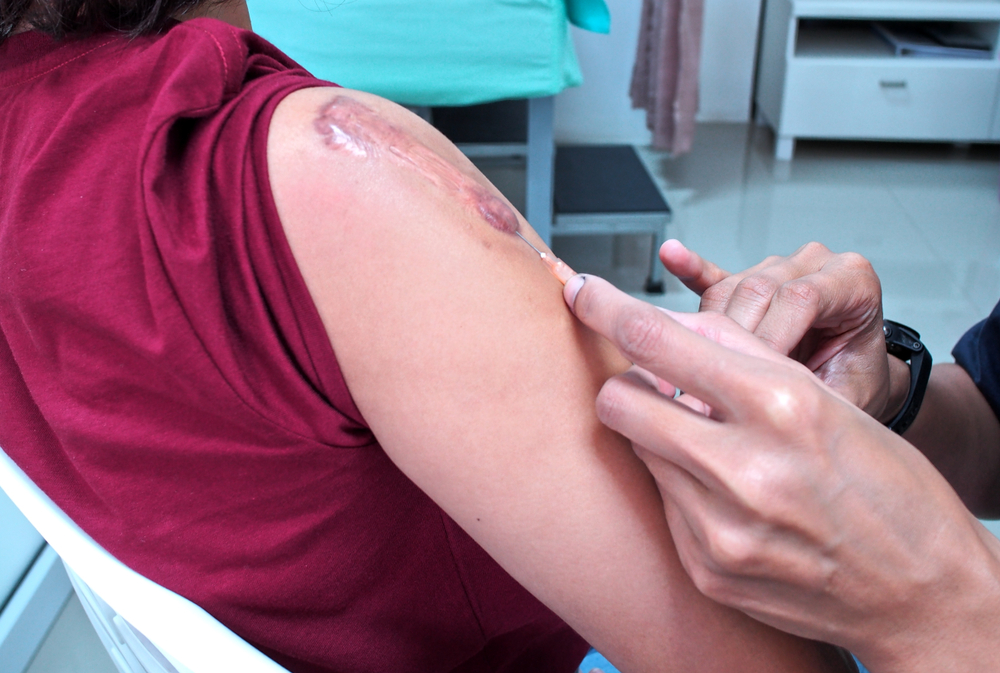
Wound care tips to lower keloid risk
- Treat wounds properly from the start. Avoid picking, scratching, or removing scabs, which increases keloid risk.
- Prevent wound inflammation, as it can stimulate excess tissue formation that leads to keloids.
- After the wound has closed, consider silicone-gel products to support skin recovery.
- As for diet, there are no absolute prohibitions, but reducing sugar, alcohol, caffeine, and nitrate-rich foods (e.g., red meat, sausages) may help wounds heal faster.
If you struggle with keloid scars and want expert advice, visit Synphaet Hospital’s Ramintra location, where dermatology and laser-surgery specialists provide care to international standards.
For more information or to book an appointment, call 1535