






Calcium is an essential nutrient for the body, but is it true that a deficiency can lead to osteoporosis? Here’s everything you need to know.
Many people already know that calcium is a mineral that helps strengthen bones and teeth. However, not everyone realizes that a lack of calcium or insufficient intake can increase the risk of osteoporosis. Therefore, raising awareness about the importance of calcium and understanding its benefits can encourage better self-care — especially in preventing osteoporosis. But how can we supplement calcium to strengthen our bones effectively? Let’s find out together in this article.
The Link Between Calcium and Osteoporosis
Calcium is essential for building strong bones and teeth. If your diet doesn’t provide enough calcium, new bone formation won’t keep up with natural bone loss. Prolonged deficiency thins the bone matrix and the body draws calcium from bones, making them porous and brittle—eventually leading to osteoporosis.
Symptoms of Osteoporosis
Osteoporosis is a condition in which bone structure becomes thinner due to inadequate calcium for bone formation. Early stages are often silent, so bone mineral density testing is needed to detect it. Without diagnosis and treatment, more serious problems can develop, such as:
- Back pain with vertebral compression fractures, causing a stooped posture or reduced height
- Fragile arm or leg bones that fracture easily, even after minor accidents
- Complications from fractures, such as pneumonia, infection, pressure sores, or loss of limb function
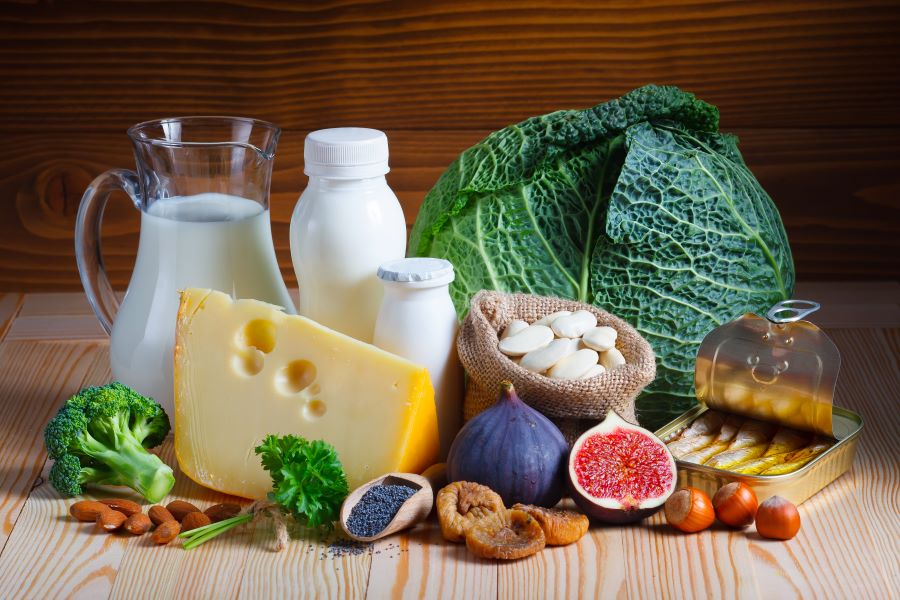
Boost Calcium Intake by Choosing Nutritious Foods
If you want to increase calcium to strengthen bones and reduce osteoporosis risk, choose foods such as:
- Dairy and dairy products—rich in calcium and easily absorbed
- Fish, especially small fish eaten with bones (e.g., anchovy-type small fish, white-scaled fish, short mackerel, salmon, mackerel) and shell-on seafood like dried shrimp or krill
- Soybeans and soy products, such as soy milk, firm tofu, and tofu pudding—excellent calcium sources for bone health
- Green leafy vegetables—kale, Chinese mustard greens, cassia, ivy gourd leaves, Asiatic pennywort, and winged beans—high in calcium and bioavailable
Factors That Enhance Calcium Absorption
Alongside calcium-rich foods, include nutrients that improve absorption:
- Vitamin D helps intestinal absorption of calcium; found in fish, egg yolks, liver, and butter
- Mildly acidic foods (e.g., citrus fruits) help dissolve calcium for easier absorption
- Lactose in fresh milk and dairy products (cheese, yogurt) can enhance calcium uptake
However, calcium can be beneficial or harmful depending on dose. Thailand’s Nutrition Division recommends age-appropriate intake for optimal bone mass. Excessive intake can accumulate and raise risks of kidney stones, breast calcifications, vascular calcification, and arterial stenosis. Suggested daily intakes are:
- Children 1–3 years: 500 mg/day
- Children 4–8 years: 800 mg/day
- School-age children & teens 9–18 years: 1,000 mg/day
- Adults 19–50 years: 800 mg/day
- Adults & seniors 51+ years: 1,000 mg/day
Tips to Lower Your Osteoporosis Risk
To reduce osteoporosis risk, in addition to getting enough calcium:
- Avoid overconsuming animal protein at the expense of daily calcium-containing foods
- Limit very salty foods; excess sodium increases urinary calcium loss
- Avoid caffeinated drinks like tea and coffee, which can raise urinary calcium excretion
- Avoid soft drinks high in phosphorus; it binds with calcium, disrupting balance and absorption
- Avoid alcohol, which interferes with calcium absorption
Although calcium supports bone health and helps lower osteoporosis risk, stay vigilant for unusual joint or bone symptoms. If you experience persistent pain, promptly see an orthopedic doctor at Synphaet Ramintra Hospital for proper diagnosis and treatment. Book online or get advice at 1535.