





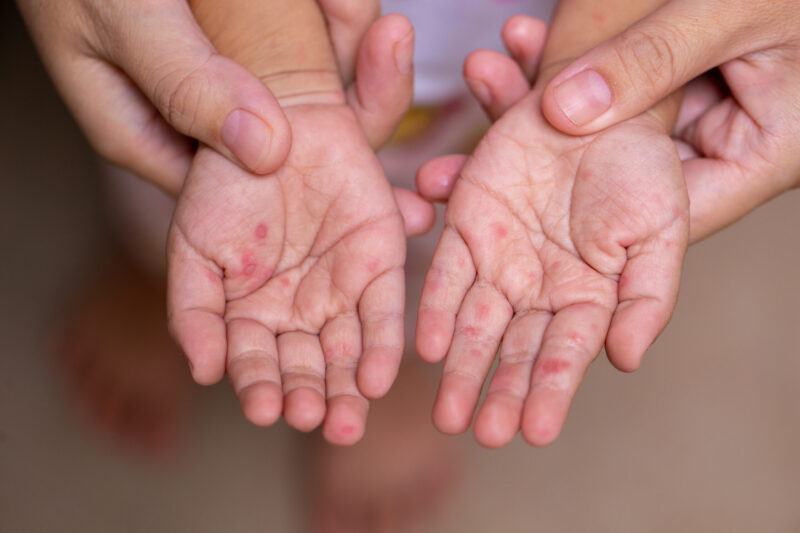
“Hand, Foot, and Mouth Disease” Understand and Prevent in Both Children and Adults
Hand, Foot, and Mouth Disease (HFMD) is a common illness, especially among young children under 5, but it can also affect older children and adults. While it is mostly a mild disease that resolves on its own, some virus strains can cause severe symptoms and life-threatening complications.
What is Hand, Foot, and Mouth Disease (HFMD)?
Hand, Foot, and Mouth Disease: It is a disease caused by an infection with the enterovirus group, of which there are many strains. The most common and primary causes are Coxsackievirus A16 (Cox A16), which usually causes mild symptoms, and Enterovirus 71 (EV71), which can lead to severe symptoms and serious complications. Hand, Foot, and Mouth Disease is transmitted through direct contact with an infected person’s secretions, such as nasal mucus, saliva, phlegm, and contaminated feces. The virus can remain in the patient’s stool for several weeks after recovery. Patients are most contagious during the first week of illness, and the disease can spread rapidly in places where many children gather, such as kindergartens and daycare centers.
Symptoms of Hand, Foot, and Mouth Disease
1. Initial Symptoms (usually occur in the first 1-2 days):
- Low-grade fever (around 38-39°C)
- Fatigue
- Body aches
- Headache
- Sore throat
- Loss of appetite
2. Specific Symptoms (usually appear 1-2 days after initial symptoms):
- Mouth sores: Small red spots or sores in the oral cavity, especially on the soft palate, tongue, inner cheeks, and gums. These spots turn into blisters and then shallow ulcers, causing significant mouth pain, especially when swallowing food or water.
- Rash/Blisters on hands and feet: A red rash or small clear blisters (about 3-7 mm) on the palms of the hands and soles of the feet. They may also be found on the buttocks, knees, elbows, or genitals. These blisters are not itchy, but slight peeling of the skin may occur after they heal.
- Other symptoms: May include excessive drooling (due to a sore throat) or refusal to eat/drink (in young children).
Symptom Differences in Children and Adults:
- In young children: Symptoms are often clear, with high fever and severe mouth pain, leading to refusal to eat and drink, which can cause dehydration.
- In older children and adults: Symptoms are usually less severe than in young children. Some may have very mild symptoms or be asymptomatic, but they can still spread the virus to others.
Hand, Foot, and Mouth Disease “EV71 Strain”: Complications to Watch For
- Dehydration: Caused by severe mouth pain leading to refusal to eat and drink, especially in young children.
- Encephalitis or Meningitis: Occurs if the virus spreads to the brain or meninges. Patients will have high fever, lethargy, seizures, severe vomiting, severe headache, stiff neck, or other abnormal neurological symptoms.
- Myocarditis: A rare but severe condition where the heart muscle becomes inflamed, causing abnormal heart function. Symptoms may include shortness of breath, palpitations, irregular heartbeat, or heart failure.
- Acute Flaccid Paralysis: Very rare, but a serious complication.
Warning Signs Requiring Immediate Medical Attention
- High fever that does not subside
- Frequent or projectile vomiting
- Lethargy, not playing, not drinking water, not eating
- Shortness of breath, abnormally fast breathing
- Seizures or abnormal jerking of limbs
- Severe headache
- Stiff neck
Treatment Guidelines
A doctor will diagnose based on symptom history and a physical examination, especially checking for sores in the mouth and rashes on the hands, feet, and buttocks. In severe cases or to confirm the virus type, the doctor may take samples from the throat, blister fluid, or stool for laboratory testing. Since it is a viral disease, there is no specific antiviral drug for HFMD. Treatment is therefore supportive and focuses on relieving symptoms:
- Fever reduction: Administer fever reducers like paracetamol (avoid aspirin in children).
- Pain relief for mouth sores: Use topical anesthetic gels or sprays in the mouth before meals.
- Preventing dehydration: Encourage the patient to drink fluids frequently. Choose soft, easy-to-swallow foods like porridge, soup, milk, ice cream, or electrolyte drinks.
- Adequate rest: To allow the body to recover.
- Close observation: Especially for warning signs of severe complications.
Prevention of Hand, Foot, and Mouth Disease
- Good Hygiene:
- Wash hands frequently: Wash hands with soap and clean water after using the toilet, after changing diapers, after contact with a patient’s secretions, and before eating.
- Clean toys and surfaces: Regularly wipe down toys, equipment, and surfaces that may be contaminated with a disinfectant.
- Separate personal items: Do not share utensils, cups, towels, or handkerchiefs with others.
- Avoid close contact: Refrain from hugging, kissing, or sharing utensils with patients.
- Patients should stay home from school/work: If symptomatic, stay home until fully recovered and no longer contagious to prevent spreading the virus.
- Avoid crowded public places: Especially during an outbreak.
- Dispose of contaminated diapers properly: Wrap them in a sealed bag before throwing them into a covered trash can.
HFMD Vaccine: 2 Doses
References
- Department of Disease Control, Ministry of Public Health: Information on Hand, Foot, and Mouth Disease
- Bangkok Hospital: Article “Hand, Foot, and Mouth Disease”
- Samitivej Hospital: Article “Hand, Foot, and Mouth Disease”
- Queen Sirikit National Institute of Child Health: Article “Hand, Foot, and Mouth Disease”
- Phyathai Hospital: Article “Understanding and Preventing Hand, Foot, and Mouth Disease”