




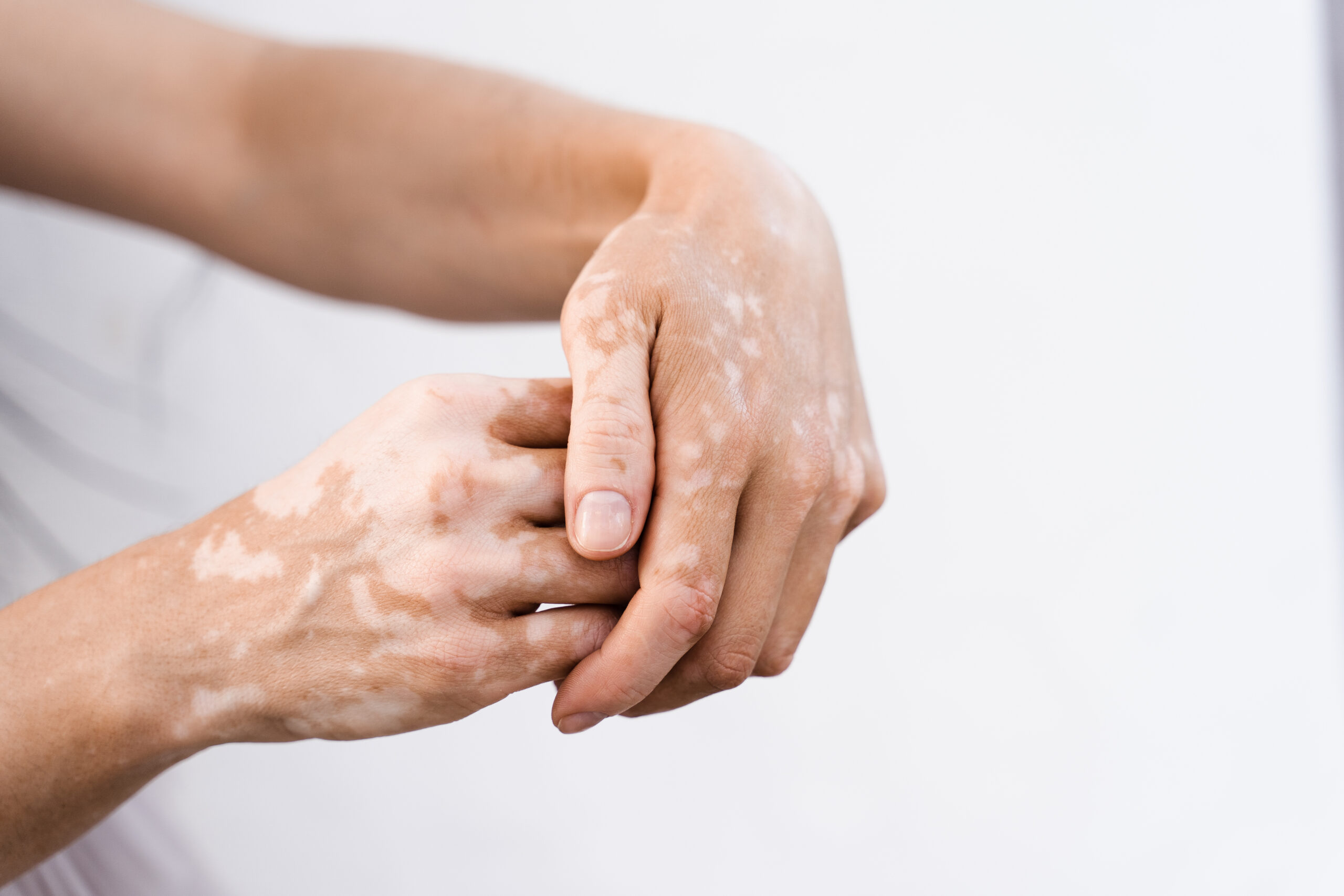
What causes vitiligo? Vitiligo is a condition caused by a malfunction of the skin’s pigment-producing cells (melanocytes), which may be destroyed or stop producing pigment altogether.
The exact causes of vitiligo are still unknown, but it may be associated with factors such as:
- Abnormal immune function; autoimmune disease
- Hyperthyroidism
- Anemia due to vitamin B12 deficiency
- Adrenal gland disorders
- Lymphoma and skin cancer
- Triggers such as chemical exposure, sunlight, and stress
Vitiligo can occur in people of any sex and age, though most cases begin before age 40. It is not contagious; touching areas of affected skin does not transmit the disease.
What are the symptoms of vitiligo?
Skin affected by vitiligo becomes pale and gradually turns white, with round or oval patches that may appear singly or in multiple areas. It usually is not itchy. Lesions often start on sun-exposed skin—such as the hands, arms, feet, neck, and face—and may spread across the body, including mucous membranes such as the mouth, genitals, and nipples. Hair growing on affected skin may also turn white. A small number of patients develop universal vitiligo, in which most of the body is involved.
How is vitiligo treated?
Vitiligo cannot be completely cured, but treatment can reduce the appearance of white patches. Multiple approaches may be used. Current treatments include:
- Medications such as topical corticosteroids or calcineurin inhibitors, which may help in small areas. Treatment takes months; consult a doctor, as prolonged steroid use can cause side effects.
- Narrowband UVB phototherapy, which can be effective but requires regular treatment for 1–2 years.
- Photochemotherapy (medicine combined with light therapy) to increase photosensitivity and stimulate melanin production.
- Depigmentation for extensive disease unresponsive to other therapies, gradually lightening normal skin to match the vitiligo patches.
- Skin grafting or micropigmentation (tattooing) to camouflage small areas; may be combined with other treatments or used when others are ineffective.
For skin concerns, consult the Dermatology and Laser Surgery Department at Synphaet Ramintra Hospital.