





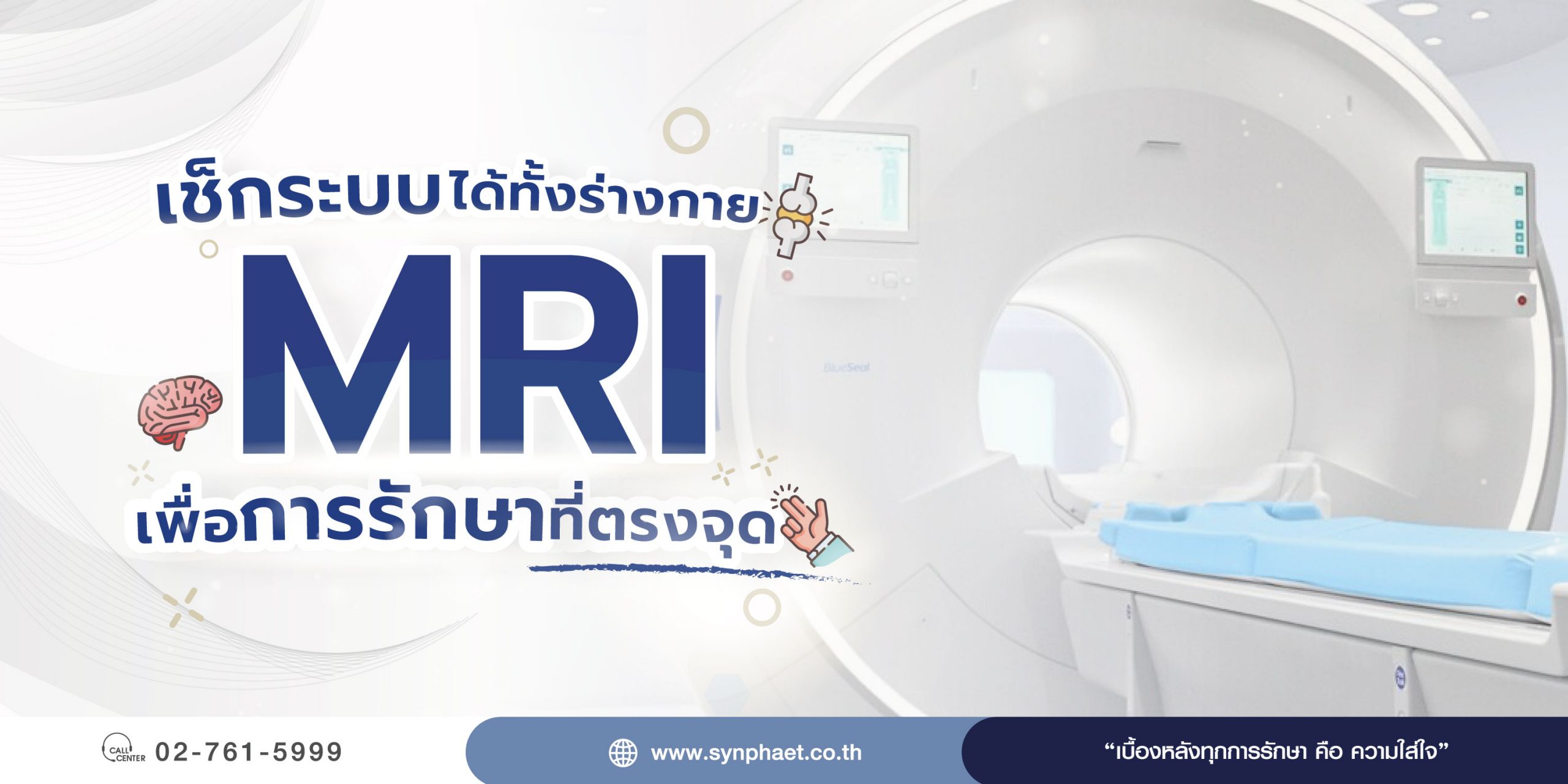
What is an MRI?
Magnetic Resonance Imaging (MRI) is a tool used to detect abnormalities in various parts of the body. It uses a high-intensity magnetic field and radio frequency waves to create cross-sectional and multi-planar images of the patient. This produces highly detailed images that help doctors diagnose diseases more accurately and precisely, without causing any harm or pain to the patient, and without using X-ray radiation.
How Does an MRI Machine Work?
It works by sending radio waves to the patient lying in a high-intensity magnetic field. When the radio wave stimulation stops, the nuclei of the atoms return to their normal energy state and release radio waves as electromagnetic signals. We can record these radio waves emitted by the tissue, process them, and use a computer system to create images of various organs. This results in images with high tissue detail and can display images of the patient in any plane.
What Organs Can an MRI Scan?
An MRI scan can detect abnormalities in almost any organ, including:
- Abnormalities within the skull, such as the brain, eyes, inner ear, and pituitary gland.
- Abnormalities of the spine and spinal cord, accurately detecting the cause of spinal cord compression or pinched nerves.
- Abnormalities of muscle tissue, various bones, and tears in muscles and tendons around joints, such as the knee and ankle.
- Abnormalities of pelvic organs, such as the uterus, prostate gland, and bladder.
- Abnormalities of organs in the chest, abdomen, and breast.
Advantages of an MRI Scan
- It can clearly differentiate between the properties of different tissues, allowing doctors to make more accurate and precise diagnoses.
- It works well for soft tissues such as brain tissue, spinal nerves, muscles, ligaments and tendons, blood vessels, bone marrow, and various joints.
- It can detect abnormalities in the body from the earliest stages.
- It can scan in all planes without having to move the patient.
- There is no harmful X-ray radiation.
Precautions Before an MRI Scan
Because the MRI room has a high-intensity magnetic field at all times, which affects the operation of magnetic-sensitive devices and attracts all types of metal objects, there are precautions to take before undergoing an MRI scan:
- Do not scan patients with metal implants in their body, such as patients who have had surgery to place clips for aneurysms, those with artificial heart valves or joints, patients with pacemakers, patients with heart stents, or patients who have had surgery for an inner ear prosthetic.
- MRI scans should be avoided in patients with claustrophobia, as the MRI machine is a tunnel-like space where the patient bed moves into.
- Patients undergoing an MRI scan must remove all metal objects, such as hair clips, dentures, earrings, jewelry, ATM or credit cards, keys, or watches.
- Patients must remove braces, and should not use eyeshadow and mascara because they contain metal components, which can create artifacts on the images.
- Although there have been no reports of side effects on the fetus, MRI scans are not performed on patients who are in the first three months of pregnancy unless absolutely necessary.
Steps for an MRI Scan
- The patient lies on the examination bed, and a magnetic coil is attached to the body part to be scanned.
- The patient is slowly moved into the center of the magnetic field.
- During the scan, there will be periodic loud noises, which are a normal part of the machine’s operation.
- For some organ scans, a contrast medium may be injected to help visualize the organs more clearly.
- The approximate scan time is 1-3 hours.